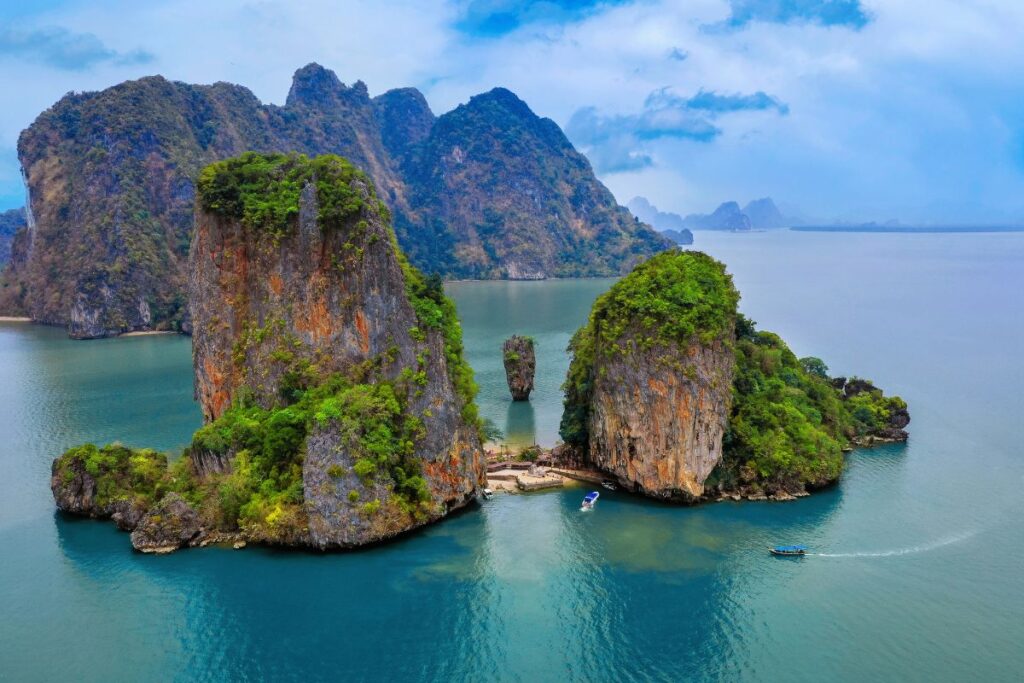
James Bond Island, officially known as Khao Phing Kan, is a limestone island formation located in Phang Nga Bay in southern Thailand, northeast of Phuket. The site is part of Ao Phang Nga National Park and is characterized by steep vertical cliffs, karst rock towers, and shallow emerald-colored waters typical of the bay’s geological landscape.
The island gained international recognition after appearing in the 1974 film The Man with the Golden Gun, which led to the informal name “James Bond Island.” The most prominent feature associated with the site is Ko Ta Pu, a narrow, freestanding limestone pillar rising sharply from the sea just offshore. This distinctive rock formation has become a widely recognized natural landmark of the region.
Geologically, the area consists of eroded limestone formations shaped over millions of years by tidal activity, rainfall, and coastal processes. Surrounding waters are shallow and dotted with mangroves, small islets, and caves, forming part of a protected marine and coastal ecosystem. As a designated national park zone, the island is subject to conservation measures intended to manage visitor access and preserve its fragile environment.
Today, James Bond Island functions as both a natural heritage site and a major point of interest within Phang Nga Bay. Its combination of unique geology, cinematic history, and protected coastal setting has made it one of the most recognizable island landmarks in southern Thailand.