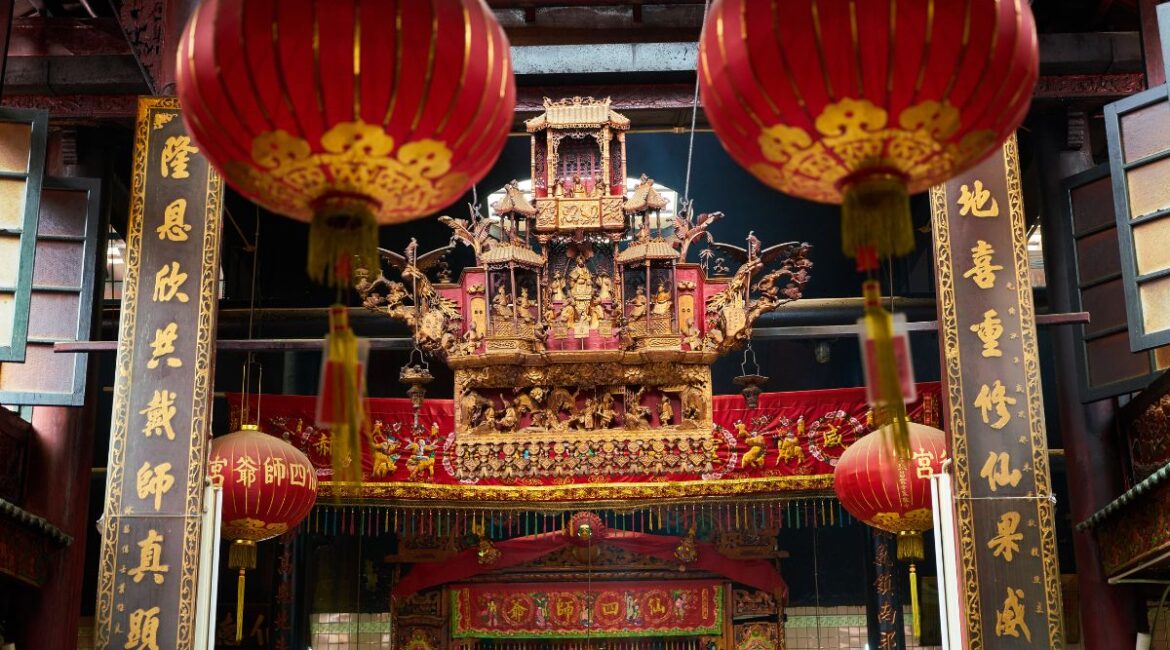
Phuket is more than beaches and nightlife. Beneath its tropical surface lies a rich spiritual landscape shaped by Thai Buddhist traditions and centuries of Chinese migration. From golden hilltop Buddhas to incense-filled Taoist shrines, visiting Phuket shrines offers a deeper look into the island’s cultural identity.
Thai Buddhist temples and Chinese shrines serve different spiritual roles, yet both are central to community life. Whether you seek blessings, cultural insight, or architectural beauty, exploring Phuket temples and shrines is one of the most meaningful experiences you can have in 2026.
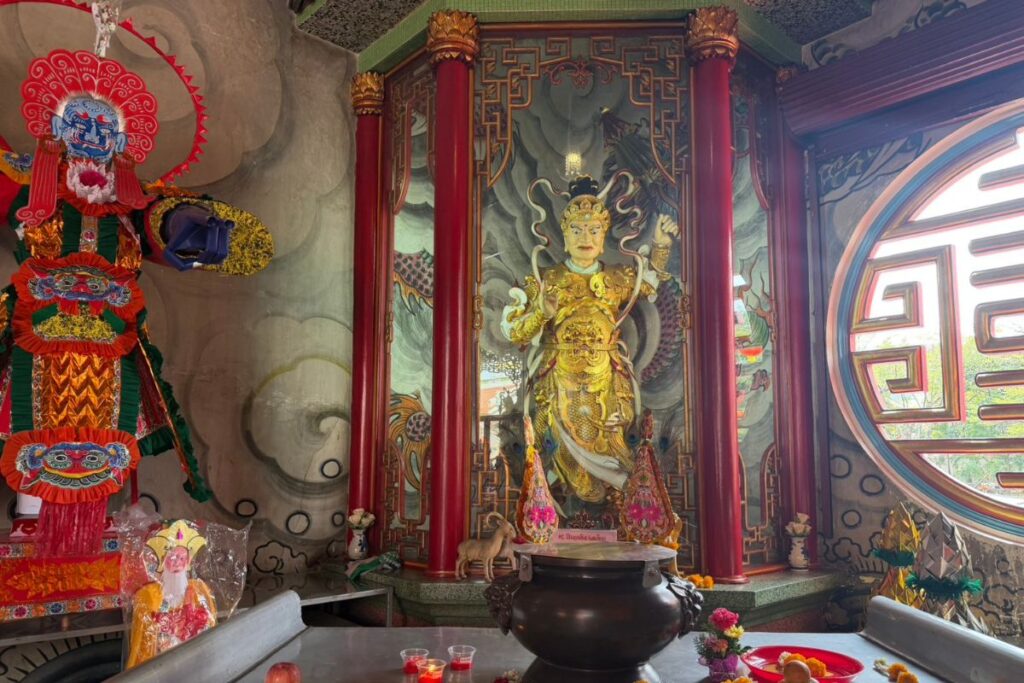
Understanding Phuket’s Shrine Culture
Thai Buddhist Temples vs Chinese Shrines
In Thailand, a Buddhist temple is called a “Wat” (วัด). These temple complexes typically include ordination halls, prayer areas, monks’ residences, and towering chedis. Worship focuses on Buddha images, merit-making, and meditation.
Chinese shrines, known locally as “San Chao” (ศาลเจ้า), reflect Phuket’s strong Sino-Thai heritage. These shrines are usually dedicated to Taoist or Chinese folk deities. Instead of monks, you’ll find shrine caretakers and ritual specialists. Worship often involves incense, red candles, and offerings to specific gods.
Key differences include:
- Wat: Buddhist teachings, merit-making, monks in saffron robes
- San Chao: Taoist/Chinese deities, incense rituals, vibrant red décor
- Buddhist temples emphasize meditation and moral practice
- Chinese shrines focus on blessings, protection, and community rituals
Both are sacred spaces and equally important in Phuket’s spiritual life.
Why Shrines Are Important to Locals
For Phuket residents, shrines are not tourist attractions but living spiritual centers. People visit to pray for:
- Health and recovery from illness
- Business success and financial prosperity
- Protection during travel
- Love and family harmony
During major festivals, shrines become the heart of community gatherings, processions, and ceremonies. Understanding this context helps visitors appreciate that Phuket temples and shrines are deeply woven into everyday life.
Most Famous Buddhist Temples in Phuket
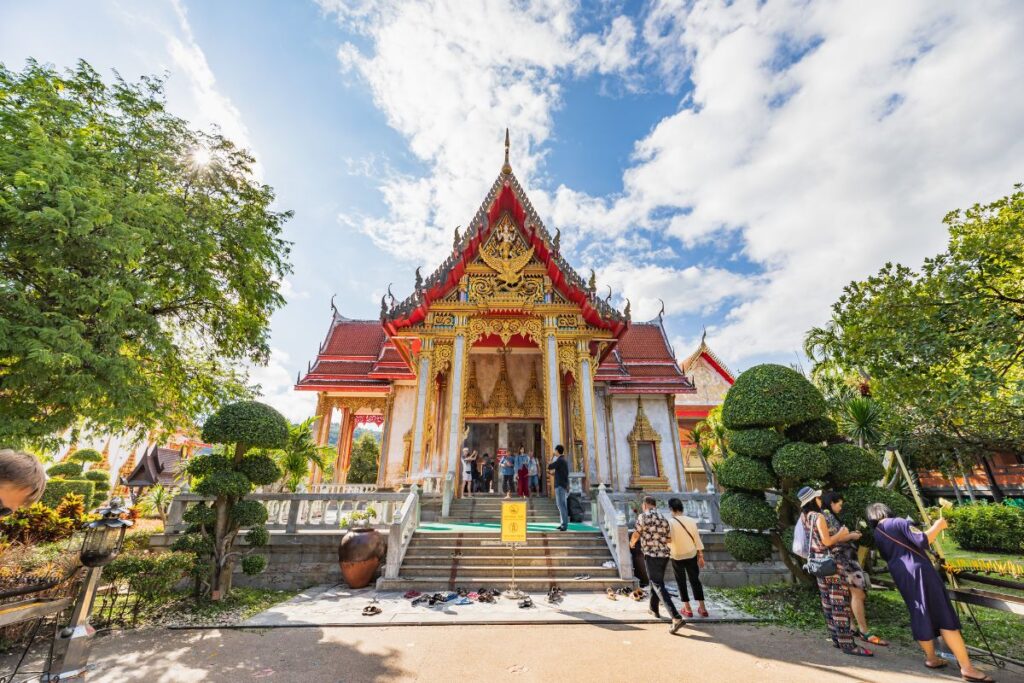
1. Wat Chalong (Wat Chaiyathararam)
Wat Chalong is the most famous and largest temple in Phuket, widely regarded as the island’s spiritual heart. The temple complex is beautifully maintained, with a grand multi-level chedi that houses a sacred fragment of Buddha’s bone, making it one of the most revered religious sites in the province. Visitors come here to light incense and candles, receive blessings from monks, and explore the richly decorated interiors adorned with colorful murals depicting scenes from Buddha’s life. For travelers searching for the best temples in Phuket, Wat Chalong is an essential stop that combines spiritual significance with impressive architecture.
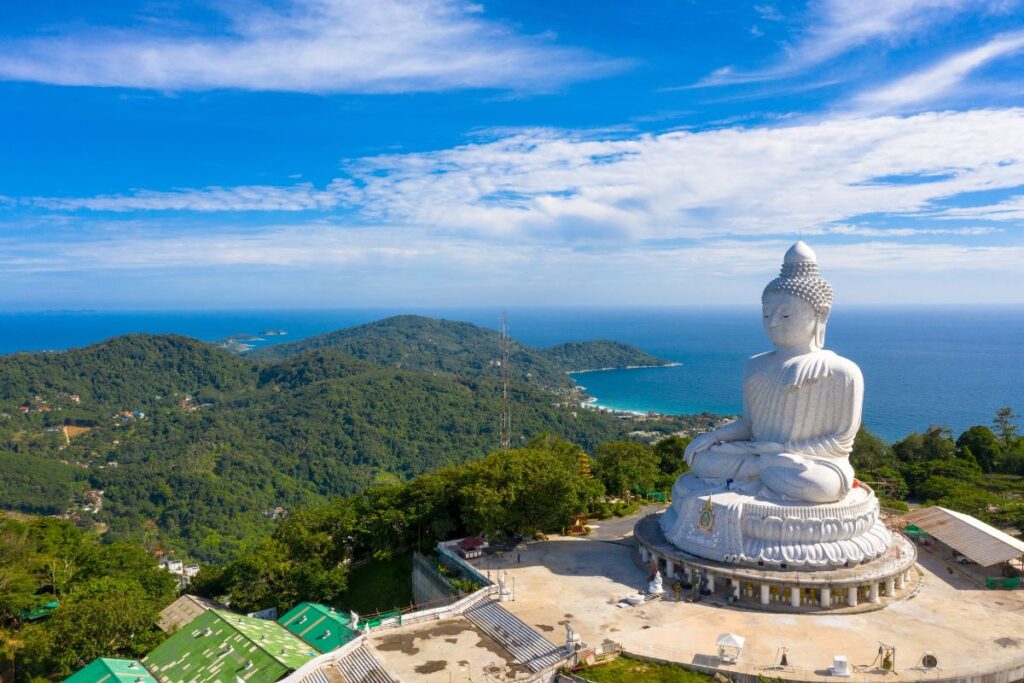
2. Big Buddha (Wat Kitti Sankaram)
Perched atop Nakkerd Hill between Chalong and Kata, the Big Buddha is both a religious landmark and one of Phuket’s most iconic attractions. The 45-meter-tall white marble statue overlooks the island, offering sweeping panoramic views of the coastline and surrounding hills. Although it is not a traditional temple complex, the site functions as an active spiritual space where visitors can make donations, write their names on marble tiles as part of ongoing construction, and sit quietly in meditation areas. Its serene atmosphere and dramatic setting make it one of the most photographed sacred temples in Phuket.
3. Wat Phra Thong
Wat Phra Thong is best known for its mysterious half-buried golden Buddha image, which appears to rise from the ground. According to local legend, anyone who tried to fully excavate the statue suffered misfortune, so only the upper portion remains visible today. This unique feature gives the temple a mystical character that draws both worshippers and curious visitors. In addition to the main shrine, the temple grounds include traditional Thai buildings, a small museum showcasing local artifacts, and a peaceful rural environment that feels far removed from Phuket’s busy beach areas.
4. Wat Phra Nang Sang
Believed to be one of Phuket’s oldest temples, Wat Phra Nang Sang dates back more than two centuries and reflects the island’s early religious history. The temple’s architecture preserves elements of traditional southern Thai design, and inside you will find ancient Buddha images that add to its historical charm. Compared to larger temples like Wat Chalong, Wat Phra Nang Sang offers a quieter and more intimate experience, making it ideal for visitors who want to explore sacred temples in Phuket beyond the main tourist routes.
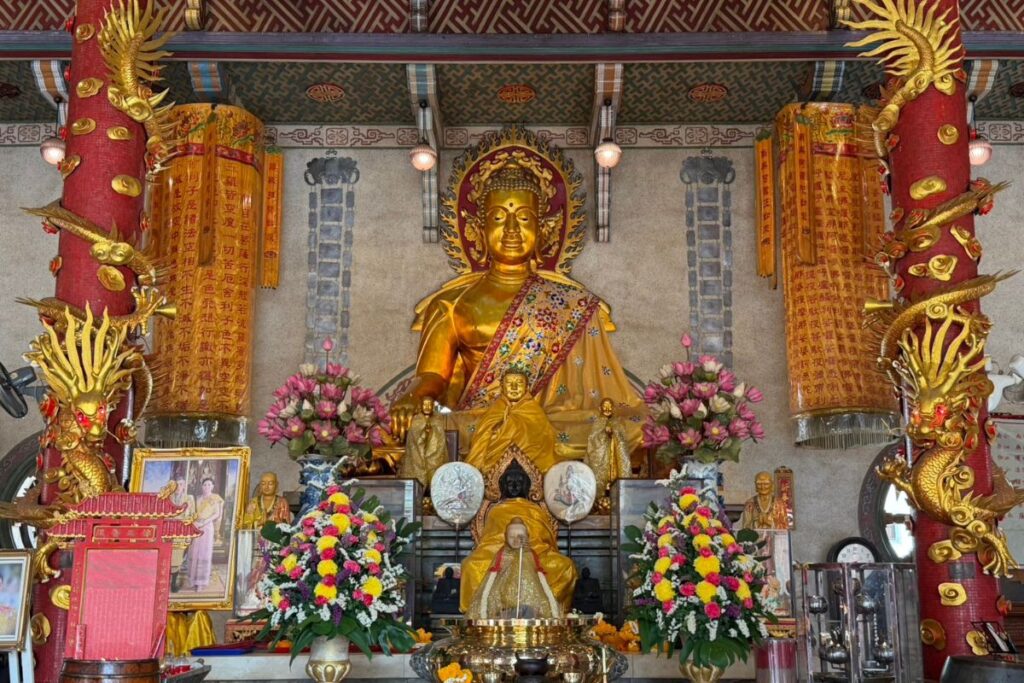
Top Chinese Shrines in Phuket
1. Jui Tui Shrine
Jui Tui Shrine is the most important of all Chinese shrines in Phuket and serves as the spiritual headquarters of the famous Phuket Vegetarian Festival. Dedicated to Taoist deities, it plays a central role in the island’s Chinese-Thai community. During festival season, the shrine becomes the focal point of dramatic rituals, including fire-walking ceremonies, spirit medium processions, and sacred street parades that move through Phuket Old Town. Outside festival periods, visitors can observe devotees lighting incense, offering prayers, and seeking blessings for health and prosperity in a richly decorated hall filled with lanterns and intricate carvings.
2. Pud Jor Shrine (Guan Yin Shrine)
Pud Jor Shrine, also known as the Guan Yin Shrine, is one of the oldest Chinese shrines in Phuket Town. It honors Guan Yin, the Goddess of Mercy, and is especially popular among locals praying for protection, healing, and compassion. The shrine’s striking red-and-gold façade, detailed dragon motifs, and elaborate rooftop decorations make it one of the most visually impressive spiritual sites in Phuket. Inside, the atmosphere is serene, with the scent of incense and soft candlelight creating a peaceful space for reflection and worship.
3. Am Bang Neow Shrine
Bang Neow Shrine is another major Chinese shrine closely associated with the Phuket Vegetarian Festival. During the annual celebrations, it becomes a key starting point for vibrant street processions where devotees carry sacred statues through the streets of Phuket Town. The shrine’s architecture reflects traditional Chinese design, and its active role in community ceremonies makes it an important cultural landmark. Throughout the year, visitors can witness daily worship rituals and experience a more local, authentic side of Phuket’s shrine culture.
4. Saeng Tham Shrine
Saeng Tham Shrine is less crowded than the more famous shrines, yet it is admired for its elegant traditional Chinese architecture and tranquil setting. The shrine features ornate carvings, colorful lanterns, and classic temple rooflines that reflect strong southern Chinese influence. Because it receives fewer tour groups, it offers a quieter atmosphere ideal for contemplation and photography. For travelers seeking a peaceful introduction to Phuket’s Chinese shrines, Saeng Tham Shrine provides an intimate and culturally rich experience.
5. Kathu Shrine (Lai Thu Tao Bo Keng Shrine)
The Kathu Shrine, formally known as Lai Thu Tao Bo Keng Shrine, is one of Phuket’s oldest Chinese temples and is believed by many to be the birthplace of the Phuket Vegetarian Festival. Located between Phuket Town and Patong, this historic shrine dates back nearly two centuries to the days of the tin-mining boom when Chinese immigrants first settled on the island. Kathu Shrine’s ornate altars and statues honor a pantheon of deities, including Guan Yin, and play a crucial role in festival ceremonies such as pole raising, fire-walking, and street processions. Visiting this shrine provides a more local and immersive experience into Phuket’s spiritual heritage.
6. Lim Hu Tai Su Shrine (Sam Kong Shrine)
Lim Hu Tai Su Shrine, also called Sam Kong Shrine, is a revered Taoist temple on the north side of Phuket Town. Though smaller than some of the island’s more famous shrines, it carries deep cultural significance and hosts its own ceremonies during the Phuket Vegetarian Festival. The shrine’s striking entrance features large serpentine dragons wrapped around the columns and intricately tiled roofs, symbolizing protection and good fortune. Its tranquil ambiance and traditional design make it a meaningful stop for visitors who want to explore beyond the most crowded spiritual sites.
7. San Chao Mae Yanang Shrine
San Chao Mae Yanang Shrine is a modest but historically significant Chinese shrine on Krabi Road in Phuket Town. Founded in 1853 by early Hokkien migrants, it honors Mae Yanang, a guardian spirit traditionally invoked for protection during travel, especially by boat or vehicle. Fishermen and traders historically paused here to make offerings before setting out to sea—a testament to Phuket’s maritime roots. The shrine becomes more active during the Vegetarian Festival when processions and ceremonies pass through its grounds, providing a glimpse into lesser-known yet meaningful spiritual traditions.
8. Kio Thian Keng Saphan Hin Shrine
Kio Thian Keng Shrine, meaning “Nine Heavens Palace,” is a contemporary Chinese temple built in 1995 and located within Saphan Hin Park in Phuket Town. Despite being newer than many historic shrines on the island, it holds great importance as the final ceremonial site of the Phuket Vegetarian Festival, where devotees gather for the dramatic farewell rituals sending off the Nine Emperor Gods.
The shrine is adorned with vibrant dragon carvings, red lanterns, and detailed statues of Taoist deities, including a striking jade image of Guan Yin, the Goddess of Mercy. While smaller in scale compared to older Chinese shrines, Kio Thian Keng becomes especially lively during festival season. Open daily, it also benefits from its scenic park setting, making it a pleasant and accessible spiritual stop for visitors exploring Phuket Town.
9. Hok Nguan Kong Shrine
Hok Nguan Kong Shrine is a historic Chinese temple located near the Surin Clock Circle in Phuket Town. Its Chinese name translates to “Fortune Origin Palace, Qingshui Ancestral Master Temple.” A stone inscription dated 1874 confirms it as one of Phuket’s oldest shrines, established by Hokkien miners from Quanzhou during the island’s tin mining boom. The shrine showcases traditional Chinese architectural details, including dragon-wrapped pillars, intricate carvings, and vibrant wall murals. It is dedicated to Ju Su Kong (Qingshui Zushi), a revered Song Dynasty monk known for his compassion and community service. While generally peaceful on most days, the shrine becomes lively during Chinese New Year and the Phuket Vegetarian Festival, when devotees gather for prayers and ceremonies.
10. Tha Rua Shrine
Tha Rua Shrine located in Thalang District near the Heroines’ Monument, is one of the oldest and most significant Chinese shrines in Phuket. Its Chinese name translates to “Wu Zhen Pavilion, Fortune Dragon Palace.” The shrine is dedicated to Po Sein (Baosheng Dadi), a revered healing deity, and plays an important role during the annual Phuket Vegetarian Festival, where it hosts sacred ceremonies and spirit medium rituals.
The shrine’s origins date back more than a century, when a monk believed to channel Po Sein reportedly healed a seriously ill villager. Following this event, a wealthy devotee funded the construction of the temple in gratitude. Today, the shrine features vibrant dragon sculptures, traditional Taoist decorations, and an impressive statue of the deity. Expanded in 2000, Tha Rua Shrine remains open daily and welcomes visitors year-round, with its most dynamic atmosphere experienced during the nine-day Vegetarian Festival each October.
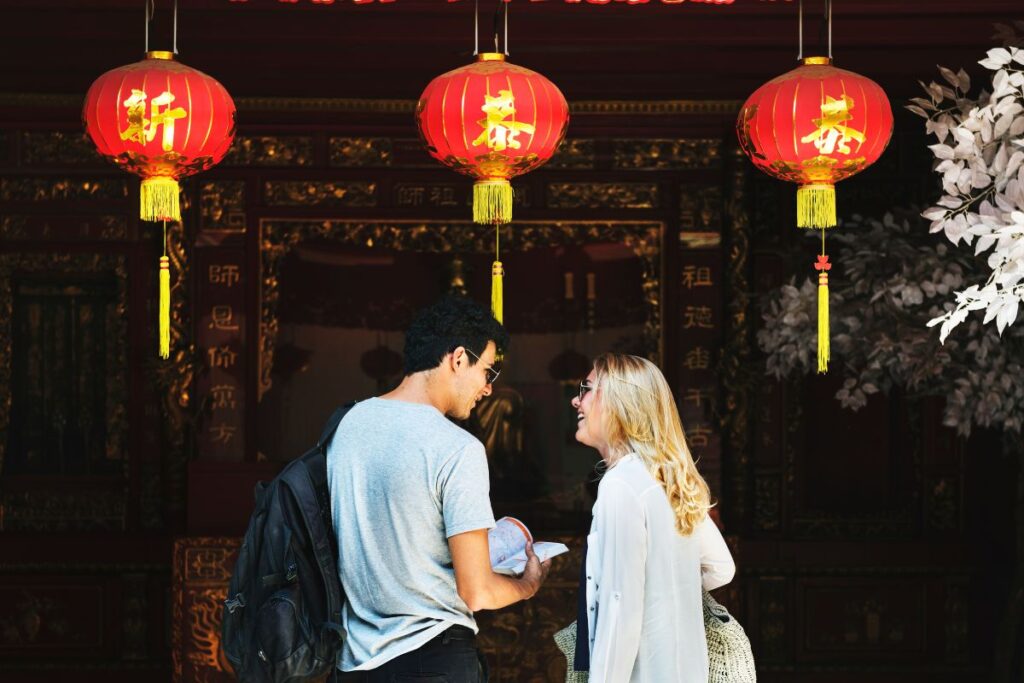
Phuket Shrines & Festivals
Phuket’s shrines are not only places of daily worship, but also the heart of the island’s most vibrant cultural celebrations. Throughout the year, both Chinese shrines and Thai Buddhist temples host festivals that blend faith, community, and tradition. Visiting during these events offers a deeper understanding of Phuket’s spiritual identity and Sino-Thai heritage.
Phuket Vegetarian Festival
The Phuket Vegetarian Festival is the island’s most famous and dramatic spiritual event, held annually for nine days, usually in September or October. Rooted in Taoist beliefs and brought to Phuket by Chinese immigrants, the festival is centered around major Chinese shrines such as Jui Tui Shrine, Bang Niao Shrine, and Pud Jor Shrine.
During this period, shrines become intensely active with:
- Daily devotional rituals and chanting ceremonies
- Fire-walking and ladder-climbing acts
- Street processions featuring spirit mediums
- Strict vegetarian food practices observed by participants
Devotees wear white clothing to symbolize purity, and many follow strict cleansing rituals to bring good fortune and spiritual renewal. The streets of Phuket Town fill with yellow flags marking vegetarian food stalls, offering plant-based dishes prepared according to traditional festival rules. It is widely regarded as one of Thailand’s most intense and visually powerful religious festivals.
Chinese New Year Celebrations
Chinese New Year is another major event when Phuket’s Chinese shrines come alive with color and celebration. Taking place between January and February, the festival transforms Phuket Town into a sea of red lanterns, incense smoke, and festive decorations.
Key shrines such as Jui Tui Shrine and Bang Niao Shrine host:
- Incense-burning and prayer ceremonies
- Lion and dragon dances
- Firecrackers and cultural performances
- Offerings for prosperity and good fortune
Families visit shrines to pray for health, business success, and protection in the coming year. The atmosphere is celebratory yet spiritual, combining traditional Chinese customs with local Thai influences.
Temple Fairs & Annual Ceremonies
Beyond major festivals, Phuket’s Buddhist temples also host smaller but meaningful annual events. Temples like Wat Chalong and Wat Phra Thong regularly organize:
- Merit-making ceremonies
- Candlelight processions on Buddhist holy days
- Community fairs with food stalls and local performances
These events offer a calmer and more intimate cultural experience compared to large-scale festivals. Early morning ceremonies, in particular, provide a peaceful opportunity to observe monks chanting and locals making offerings.
Whether during the Vegetarian Festival, Chinese New Year, or a traditional temple fair, Phuket shrines are more than architectural landmarks. They are living spiritual centers that reflect the island’s multicultural roots and strong community traditions.
Suggested Phuket Shrine Tour Route
Exploring Phuket shrines becomes more meaningful when you follow a well-planned route. Whether you prefer a walking tour through historic streets or a scenic hilltop temple experience, these suggested itineraries help you experience the island’s spiritual highlights efficiently.
Option 1: Phuket Town Shrine Walk
This route is ideal for visitors who want to explore the most important Chinese shrines in Phuket within walking distance of each other. It works perfectly as a half-day cultural walk in Phuket Old Town.
Jui Tui Shrine
Start at Jui Tui Shrine, the spiritual heart of Phuket’s Chinese community and the headquarters of the Vegetarian Festival. Spend time observing the incense rituals, red lantern decorations, and intricate Taoist altar details.
Pud Jor Shrine (Guan Yin Shrine)
A short walk away, Pud Jor Shrine offers a quieter but equally beautiful atmosphere. Dedicated to Guan Yin, the Goddess of Mercy, it is known for prayers related to protection and healing. The red-and-gold architecture and dragon carvings make it highly photogenic.
Bang Neow Shrine (Am Bang Neow)
End your walk at Bang Neow Shrine, another major Vegetarian Festival shrine. During festival season, this area becomes the starting point for dramatic street processions. On regular days, it offers a peaceful space for reflection.
Why this route works:
- Easy walking distance between sites
- Deep dive into Chinese shrine culture
- Convenient access to local cafés and restaurants in Old Town
- Ideal for cultural travelers and photographers
Allow 2–3 hours including time for photos and short rest stops.
Option 2: Chalong Spiritual Route
This route combines Phuket’s most important Buddhist temples with panoramic island views. It is best done by car or taxi and works well as a half-day trip from central Phuket.
Wat Chalong (Wat Chaiyathararam)
Begin at Phuket’s largest and most sacred Buddhist temple. Explore the grand chedi, admire mural paintings, and observe locals making merit and lighting incense.
Big Buddha (Wat Kitti Sankaram)
Drive up Nakkerd Hill to visit the iconic 45-meter white marble statue overlooking Phuket. Beyond the views, it serves as a spiritual site where visitors can meditate, make donations, and write names on marble tiles.
Wat Phra Thong
Finish at Wat Phra Thong, known for its legendary half-buried golden Buddha. The quieter rural setting provides a peaceful contrast to the busy hilltop landmark.
Why this route works:
- Combines spirituality and scenic viewpoints
- Covers Phuket’s most famous Buddhist landmarks
- Suitable for families and first-time visitors
- Great photo opportunities with island panoramas
Plan 3–4 hours including travel time and short breaks.
Option 3: Half-Day Cultural Tour Plan
For travelers wanting a balanced cultural experience, combine both shrine visits and Old Town exploration.
Morning Plan:
- Start early at Wat Chalong to avoid heat and crowds
- Visit Big Buddha for morning light and cooler temperatures
- Head to Phuket Town to explore Jui Tui Shrine
Lunch & Cultural Exploration:
- Enjoy lunch in Phuket Old Town at a local Thai-Chinese restaurant
- Walk through historic streets lined with Sino-Portuguese buildings
- Stop for coffee or dessert at a heritage café
This combination allows you to experience both Buddhist temples and Chinese shrines in a single half-day itinerary while also enjoying Phuket’s historic architecture and local cuisine.
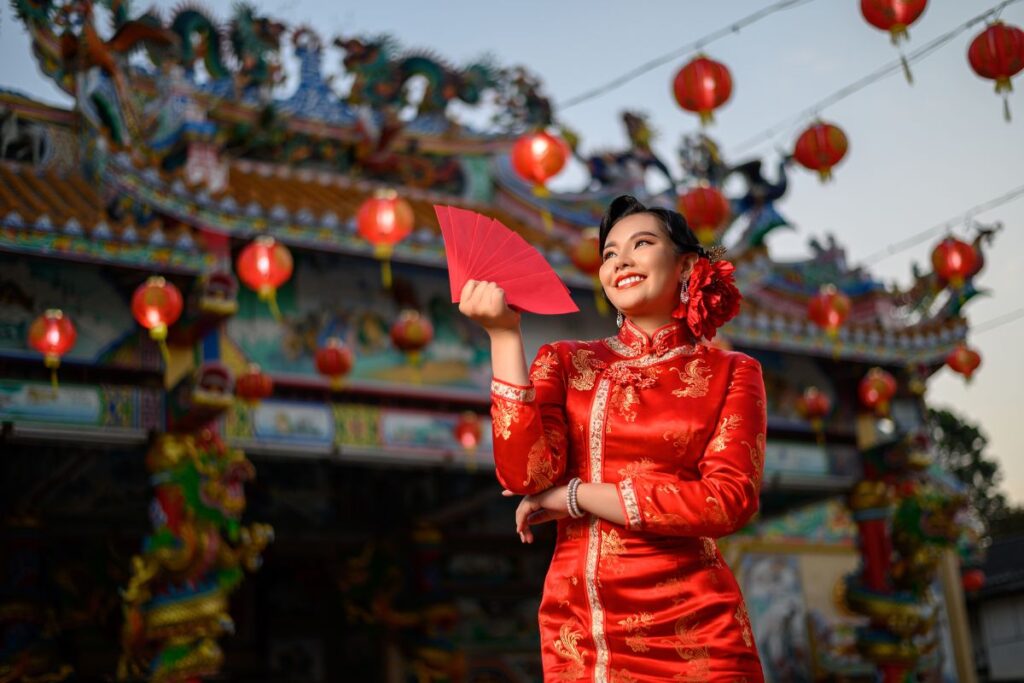
Phuket Shrine Etiquette & Visitor Tips
Visiting Phuket shrines is not only a sightseeing experience but also a cultural and spiritual encounter. Whether you are exploring Buddhist temples or Chinese shrines, showing respect is essential.
1. Dress Code
Modest clothing is required at all Phuket shrines.
- Cover shoulders and knees
- Avoid sleeveless tops, short skirts, or short shorts
- Bring a light scarf or shawl if needed
Some major temples such as Wat Chalong and the Big Buddha may provide sarongs for visitors, but it is best to dress appropriately in advance.
2. Behavior Inside Shrines
Shrines are active places of worship, not just tourist attractions.
- Remove shoes before entering prayer halls
- Keep your voice low and avoid loud conversations
- Do not point your feet toward Buddha images or altars
- Step carefully around people who are praying
In Chinese shrines, incense smoke and candle flames are common. Move slowly and be mindful of worshippers performing rituals.
3. Photography Guidelines
Photography is usually allowed, but always be respectful.
- Avoid using flash inside prayer halls
- Ask permission before photographing monks or worshippers
- Never interrupt ceremonies for photos
During major festivals such as the Phuket Vegetarian Festival, processions may be photographed, but maintain a respectful distance.
4. Making Merit & Offering Prayers
If you wish to participate in local practices:
- Light incense sticks carefully and place them upright in designated holders
- Offer a small donation in donation boxes
- Observe how locals bow or pray before copying their gestures
In Buddhist temples, merit-making often involves offering flowers, candles, or gold leaf. In Chinese shrines, devotees may offer incense, fruit, or symbolic paper items.
5. Best Visiting Times
To enjoy Phuket shrines comfortably:
- Visit early morning for cooler temperatures and peaceful surroundings
- Late afternoon is also pleasant, especially for hilltop sites
- Avoid peak midday heat, particularly at outdoor locations like Big Buddha
Early visits allow you to experience monks chanting and locals performing morning prayers, creating a calm and authentic atmosphere.
Best Time to Visit Phuket Shrines
Timing can significantly enhance your shrine experience.
Early Morning
The best time to visit Phuket shrines is between 7:00 AM and 9:00 AM. During this period:
- The air is cooler
- Crowds are minimal
- Monks may be chanting
- The atmosphere feels serene and spiritual
This is ideal for visitors seeking a quiet and reflective experience.
Festival Periods
For those wanting vibrant cultural immersion, visit during major celebrations such as:
- Chinese New Year in Phuket
- Phuket Vegetarian Festival
During these periods, shrines are decorated with lanterns and banners, and ceremonies, lion dances, and processions fill the streets. While the atmosphere is energetic and visually stunning, expect heavy crowds and road closures.
Avoid Midday Heat
Phuket’s tropical climate can be intense between 12 PM and 3 PM. Visiting hilltop sites like the Big Buddha during this time can feel exhausting due to direct sun exposure and limited shade.
If you must visit during midday:
- Stay hydrated
- Wear sunscreen
- Take breaks in shaded areas
By planning your shrine visits thoughtfully, you can experience Phuket’s spiritual sites comfortably while respecting local traditions and customs.
Make your Phuket trip truly unforgettable by diving deeper into inspiring travel guides on the beauty of Kamala Beach, the charm of Karon Beach, vibrant Patong Beach experiences, must-try things to do in Karon Beach, and smart planning tips in our best time to visit Phuket guide. Complete your journey by celebrating Chinese New Year in Phuket with colorful shrine ceremonies and lantern-lit streets, then return for the lively water celebrations of Songkran in Phuket on your next visit.
FAQs about Phuket Shrines
The most famous Phuket shrines include Wat Chalong, Big Buddha, Wat Phra Thong, and key Chinese shrines such as Jui Tui Shrine, Bang Niao Shrine, and Pud Jor Shrine (Guan Yin Shrine). These sites reflect Phuket’s unique blend of Thai Buddhist and Chinese spiritual traditions.
In Phuket, a “Wat” refers to a Thai Buddhist temple complex, usually with monks, ordination halls, and large Buddha statues. A Chinese shrine (San Chao) is dedicated to Taoist or Chinese deities and is often associated with incense rituals, red lanterns, and community festivals like the Vegetarian Festival.
Jui Tui Shrine is considered the most important Chinese shrine in Phuket. It serves as the spiritual center of the Phuket Vegetarian Festival and hosts major ceremonies and processions during festival periods.
Most Phuket shrines and temples are free to enter. Donations are welcome and appreciated, especially if you light incense, make offerings, or wish to support maintenance of the site.
Visitors should dress modestly:
– Cover shoulders and knees
– Avoid revealing clothing
– Remove shoes before entering prayer halls
Proper attire shows respect for local religious customs.
Early morning is the best time for a peaceful atmosphere and cooler temperatures. Festival periods such as Chinese New Year and the Phuket Vegetarian Festival offer vibrant cultural experiences, though they attract large crowds.
Yes, visitors may respectfully participate in simple rituals such as lighting incense or making small donations. It is recommended to observe locals first and follow their example.
You can comfortably visit 3 to 4 shrines in half a day, especially in Phuket Town where several Chinese shrines are within walking distance. Combining Wat Chalong and Big Buddha also makes for a convenient half-day spiritual route.
Yes, Phuket shrines are family-friendly cultural attractions. However, during major festivals like the Vegetarian Festival, crowds can be very dense and intense for young children.
The Phuket Vegetarian Festival is the most significant shrine-related event. It features dramatic rituals, fire-walking ceremonies, and street processions centered around Chinese shrines such as Jui Tui and Bang Niao. Chinese New Year is also widely celebrated across Phuket Town’s shrines.