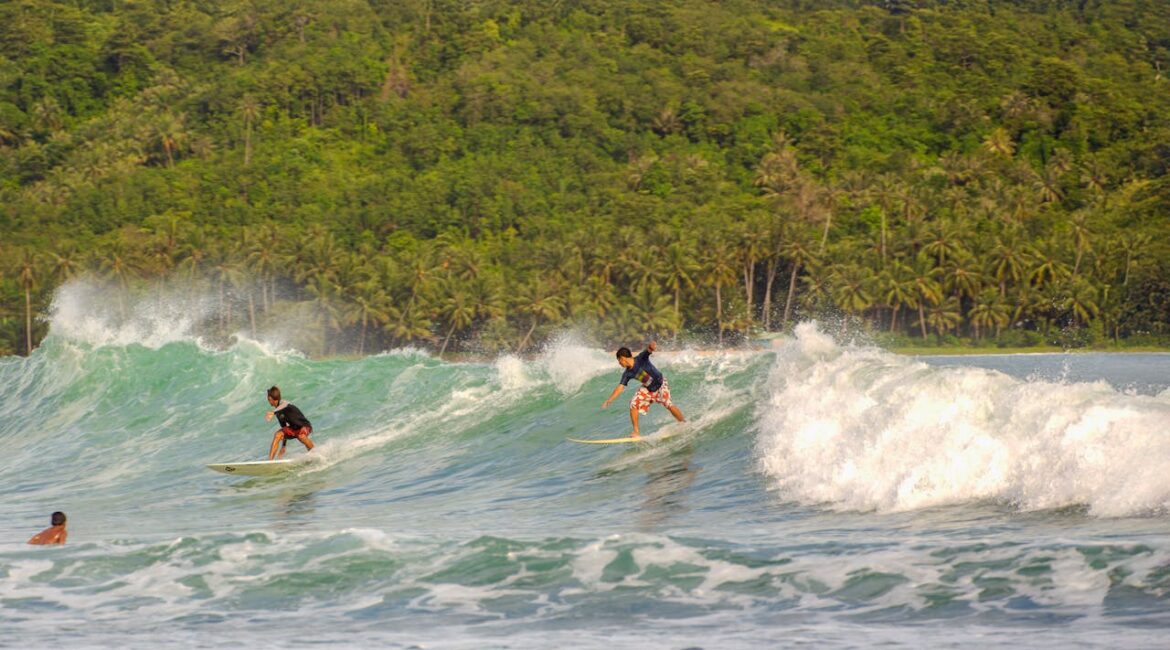
Looking to surf in Phuket? Check our our guide to discover the best surfing season, surf spots and surf schools in Phuket for an unforgettable surfing trip in Phuket.
When Is Surfing Season in Phuket?
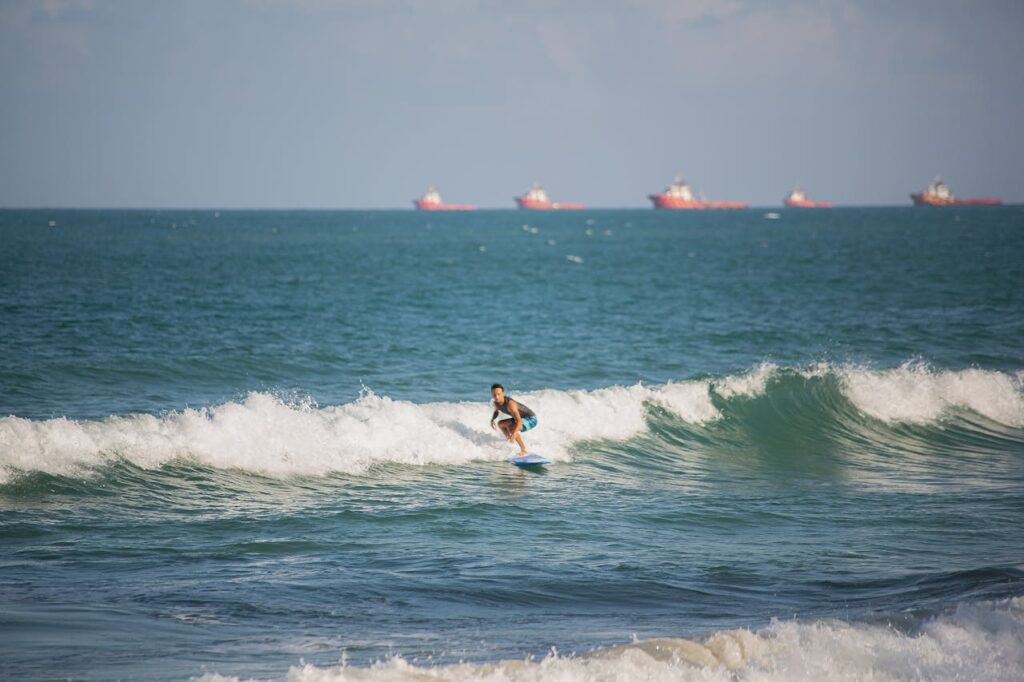
Surfing in Phuket runs from May to October, driven by the southwest monsoon. Swells during this period range from 0.5 to 3 metres — small enough for beginners on calmer days, punchy enough to challenge experienced surfers when larger systems push through.
Outside of this window, the west coast is typically flat and better suited to snorkelling than surfing.
Best time of day: 7:00 AM to 10:00 AM gives you the cleanest, most groomed conditions before afternoon winds chop up the surface.
Best tides: Mid-tide on the rise is the sweet spot for most Phuket breaks.
Best Surf Spots in Phuket by Skill Level
Beginner Surf Beaches
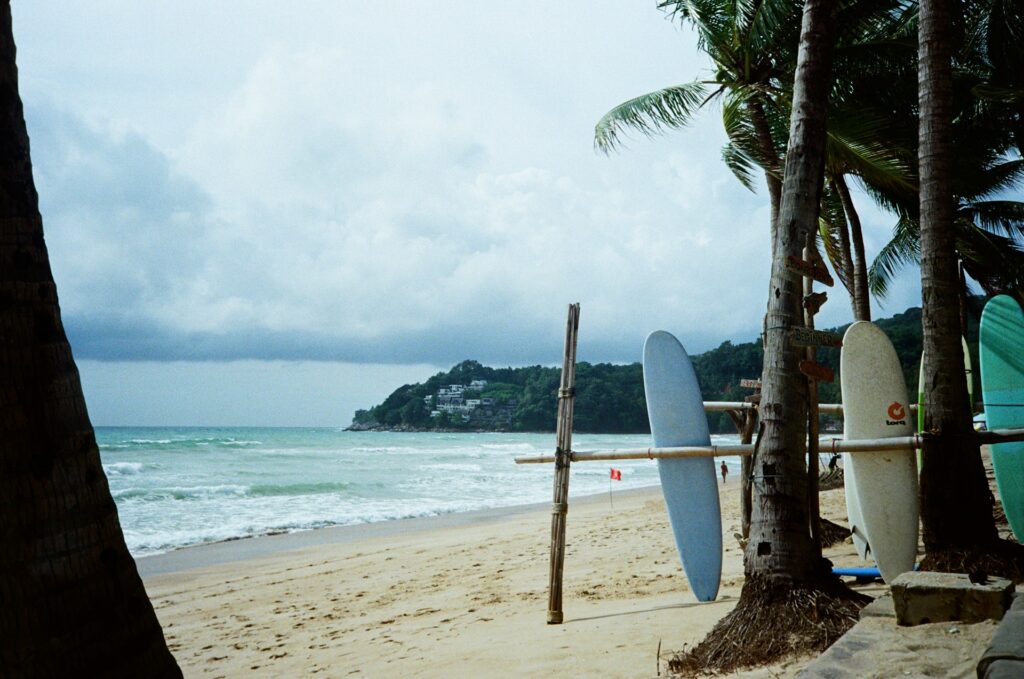
Kata Beach (หาดกะตะ) Kata is the centre of surfing in Phuket — sandy bottom, forgiving waves, and the highest density of surf schools and board rentals on the island. If this is your first time on a board, start here. Multiple schools run structured beginner lessons daily throughout the surf season.
Bang Tao Beach (หาดบางเทา) The central section of Bang Tao’s 10 km stretch produces soft, slow-breaking waves well-suited to learners. It’s less crowded than Kata and gives beginners more room to work with. Talay Surf and Saltwater Dreaming both operate on Bang Tao Beach.
Kamala Beach (หาดกมลา) The northern end of Kamala generates long, stable breaks that give first-timers time to find their balance. It’s quieter than Kata, which can be an advantage if you want fewer eyes on your early wipeouts. Read our full guide to planning a day at Kamala Beach before heading out.
Intermediate and Advanced Breaks
Kalim Beach (หาดกะหลิม) Just north of Patong, Kalim offers a technical right-hand reef break with rides of 80–100 metres on a solid 1.5m+ swell. Mid-to-high tide is the only viable window — as the tide drops, the reef becomes exposed, unrideable, and dangerous. Not for beginners, and not for overconfident intermediates either.
Surin Beach (หาดสุรินทร์) Heavy, fast waves breaking close to rocky headlands, with strong currents throughout. Surin rewards surfers who can read water and exit safely. Give it a miss if you’re still building confidence.
Nai Harn Beach (หาดในหาน) At Phuket’s southern tip, Nai Harn delivers a punchy beach break that can produce hollow sections on bigger swell days. Capable intermediates can handle it; it’s a local favourite for a reason.
Surf Schools and Rentals in Phuket (2026)
| School | Location | 2026 Pricing (Approx) |
| Phuket Surfing | Kata Beach | THB 1,000 / hour (private) |
| Whale Surf School | Kata Beach | THB 1,000 / hour |
| Talay Surf | Bang Tao Beach, in front of Arinara Resort Bangtao Beach | From THB 1,000 (group); THB 1,200–1,500 (private) |
| Saltwater Dreaming | Bang Tao Beach | Multi-day camps THB 6,500–12,000 (price varies with accommodation inclusions) |
All prices are approximate and subject to change — confirm directly with each school before booking.
Board rentals are available at Kata Beach and Bang Tao without booking a lesson:
- 1 hour: THB 200–300
- 2 hours: THB 400–500
- Full day: THB 800–1,000
Soft-top foam boards are standard — the right choice for beginners and more forgiving in a wipeout.
For a wider look at beach activities beyond the surf, explore what else Phuket’s coastline has to offer in Phuket’s hidden beaches.
Dry Season Alternative: Surf House Phuket
If you’re in Phuket between November and April and want to get on a board, Surf House Phuket at Kata Beach is the practical option. The flowrider runs daily from 11:30 AM to 8:00 PM, making it a solid afternoon activity.
- Address: 4 Pakbang Road, Tambon Karon, Phuket 83100
- Hours: 11:30 AM – 8:00 PM daily
- Pricing: THB 1,000–1,200 per hour (walk-in)
Surf Events in Phuket
The main annual surf competition is the Phuket Surf Contest, organised by the Phuket Surfing Association. The 2026 event is expected during the peak swell window of August–September at Kata Beach — specific waiting period dates are announced based on swell forecasts. Stay tuned to the Phuket Surfing Association’s channels for the 2026 schedule.
Surf Conditions at a Glance
| Beach | Level | Wave Type | Key Hazard |
| Kata Beach | Beginner | Gentle, sandy | None significant |
| Bang Tao (central) | Beginner | Soft, slow breaks | Occasional rip current |
| Kamala Beach (north) | Beginner | Long, stable | Low season only |
| Kalim Beach | Intermediate–Advanced | Right-hand reef break | Shallow reef; mid-to-high tide only |
| Surin Beach | Advanced | Heavy, fast | Strong currents |
| Nai Harn Beach | Intermediate–Advanced | Punchy, hollow sections | Rip currents |
Safety on Phuket’s Surf Beaches
Red flags mean stay out — not a suggestion. Red flags indicate dangerous rip currents and conditions, and the rule applies to surfers as much as swimmers.
Lifeguard patrols at the main beaches generally begin around 9:00 AM and run until approximately 5:30 PM, though hours can vary by beach and day. If you’re surfing the early-morning glass — 7:00 AM to 9:00 AM, which is often the best window — you may be in the water before any patrol is in place. Exercise extra caution during this period, and if you’re with children or less confident swimmers, seriously consider waiting until patrols are likely to be active before getting in.
Practical rules for specific spots: always check the tide before paddling out at Kalim — low tide exposes sharp reef and makes the break genuinely dangerous. Treat Surin’s currents seriously regardless of experience level.
Getting to the Surf Beaches
A Grab or Bolt from Phuket Town to Kata Beach (20 km) costs roughly THB 400–600 in normal conditions. During surge pricing — common on rainy afternoons — fares can reach THB 750.
Patong to Bang Tao takes approximately 30–45 minutes depending on traffic. The coast road via Kamala can slow considerably during peak hours.
Karon Beach (หาดกะรน) sits directly adjacent to Kata and sometimes picks up similar swell at its southern end. See the full Karon Beach guide for what to expect, and check what to do in Karon if you’re combining a surf day with time on land.
FAQs
May to October. The southwest monsoon generates the most consistent swells, with August and September typically producing the largest waves.
Kata Beach — sandy bottom, forgiving waves, and the most surf schools on the island. Bang Tao (central section) and Kamala’s northern end are good alternatives if you want fewer people around.
No — the west coast is generally flat from November to April. For a surf fix during this period, the flowrider at Surf House Phuket (Kata Beach) is open daily from 11:30 AM to 8:00 PM.
Private lessons typically cost THB 1,000–1,500 per hour depending on the school, with board hire usually included. Multi-day camps at Saltwater Dreaming start from THB 6,500.
Approximately THB 200–300 per hour, THB 400–500 for two hours, or THB 800–1,000 for a full day — available at Kata Beach and Bang Tao without needing to book a lesson.
No. Kalim is a reef break that is only surfable at mid-to-high tide. The reef is sharp and extremely shallow as the tide drops. Beginners should stick to the sandy breaks at Kata or Bang Tao.
7:00 AM to 10:00 AM. Waves are cleanest before afternoon winds create choppy surface conditions. Note that lifeguard patrols may not begin until around 9:00 AM — check locally before heading out.
Patrols generally run from around 9:00 AM to 5:30 PM, but hours vary by beach and are not guaranteed. Early-morning surfers — and anyone with children — should not assume coverage is in place.
The Phuket Surf Contest, organised by the Phuket Surfing Association, is typically held during August–September at Kata Beach. Stay tuned to their channels for the 2026 schedule.
Surf House Phuket at Kata Beach runs a flowrider daily from 11:30 AM to 8:00 PM — the main year-round option when the ocean is flat. Find them at 4 Pakbang Road, Tambon Karon.