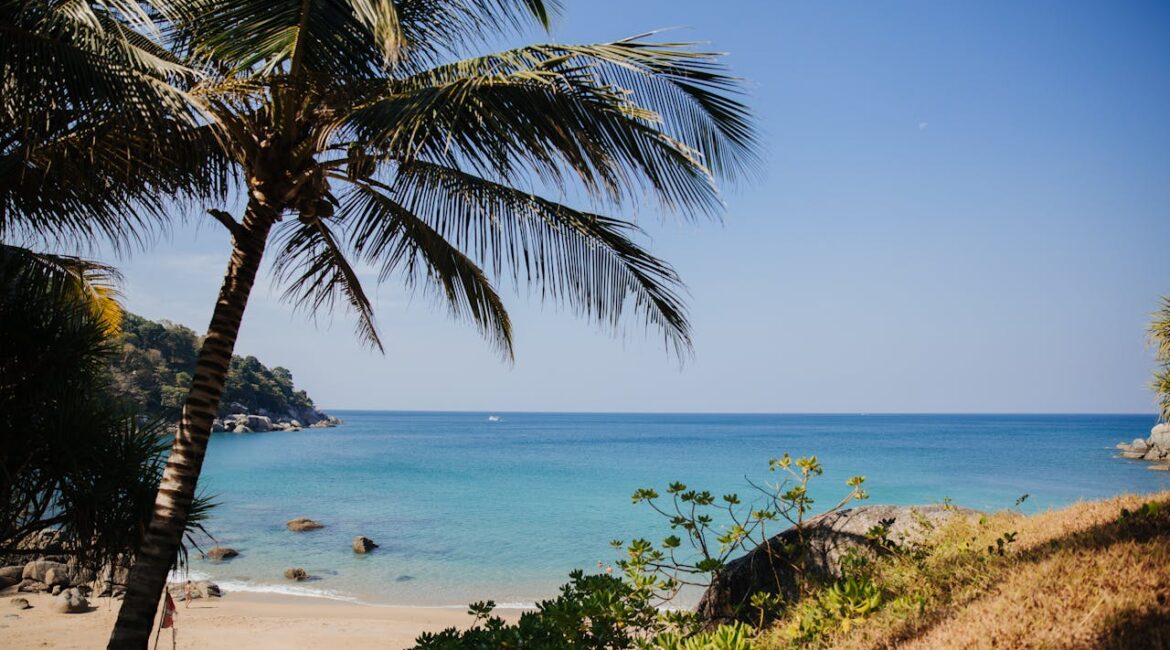
Phuket has over 30 beaches — and picking the wrong one wastes half a day. This guide cuts through the noise and ranks the best beaches in Phuket by what actually matters: who they suit, what the water is like, and how easy they are to reach.
Whether you’re looking for a secluded cove, calm water for the kids, or a beach with a sunset cocktail scene, there’s a stretch of sand here that fits. Here’s where to go.
The Best Beaches in Phuket at a Glance
| Beach | Best For | Vibe | Water Quality | Crowd Level |
| Freedom Beach | Seclusion & snorkelling | Wild, unspoiled | Excellent | Low |
| Nai Harn Beach | Relaxation, local feel | Quiet, scenic | Very good | Low–Medium |
| Kata Noi Beach | Couples, clear water | Upscale, calm | Excellent | Low–Medium |
| Surin Beach | Trendy, upscale day out | Chic, golden sand | Good | Medium |
| Bang Tao Beach | Long walks, families, nomads | Relaxed, spacious | Good | Low–Medium |
| Kata Beach | Families, surfing | Active, friendly | Very good | Medium |
| Karon Beach | Space, families | Open, breezy | Good | Medium |
| Kamala Beach | Quiet getaway, mid-stay | Mellow, local | Good | Low |
| Nai Yang Beach | Nature, airport proximity | Peaceful, national park | Good | Very Low |
| Patong Beach | Nightlife, action | Buzzing, commercial | Fair | Very High |
1. Freedom Beach (หาดฟรีดอม) — Best Overall for Scenery
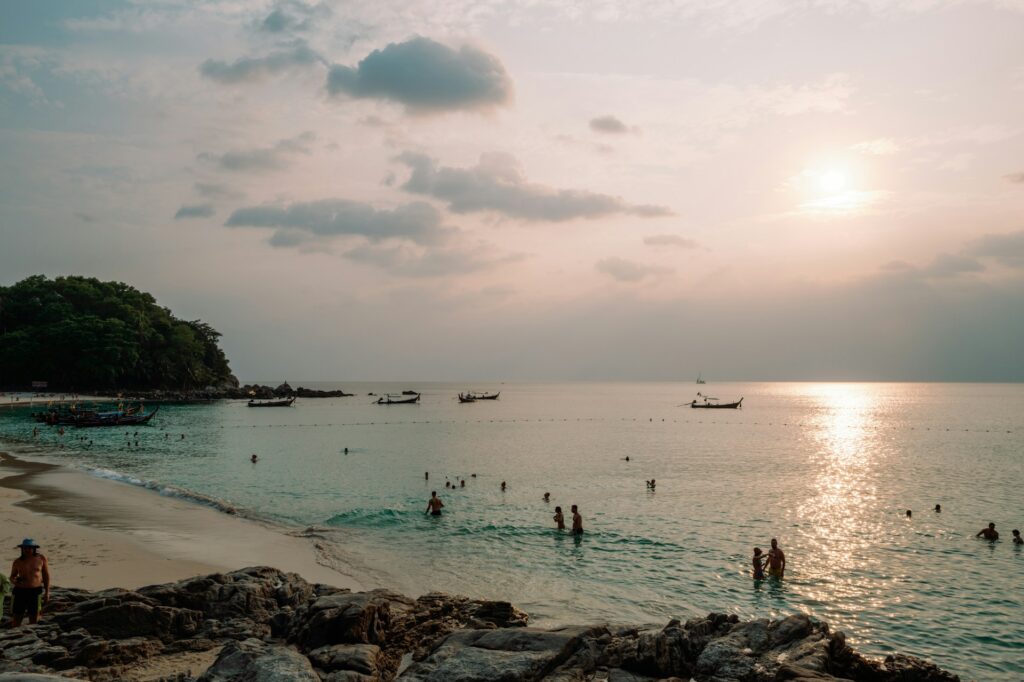
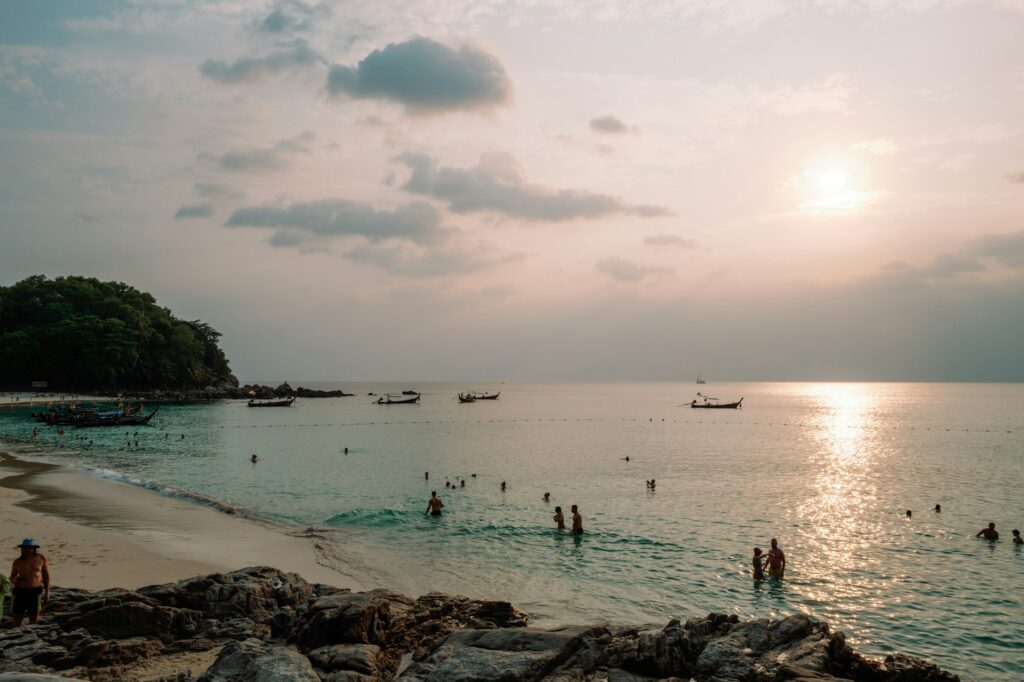
Freedom Beach is the most consistently praised beach in Phuket for a reason: powdery white sand, turquoise water, and no road access keeping the crowds away. It sits just south of Patong on a forested hillside and can only be reached by long-tail boat from Patong Beach (หาดป่าตอง) or by a steep hiking trail.
The snorkelling here is some of the best on Phuket’s west coast — rocky outcrops on both ends of the bay hold coral and small reef fish. Come on a weekday morning for the closest thing to a private beach you’ll find this close to town.
Getting there: Long-tail boats depart from the southern end of Patong Beach, near the rocks. The ride takes 10–15 minutes. Boats are chartered per vessel, not per person — a round trip runs THB 1,000–2,000 depending on negotiation, covering up to 4–6 passengers. Split between a group, that works out to roughly THB 200–500 per person. The hiking trail from the roadside near Tri Trang Beach (หาดไตรตรัง) takes 20–30 minutes and is steep — there’s also a small entry fee of approximately THB 100 to cross private land at the trailhead.
There’s more to do in the area than just the beach — see the full Freedom Beach activities page before you go.
2. Nai Harn Beach (หาดในหาน) — Best for Peace and Quiet
Nai Harn sits at Phuket’s southern tip and is the beach most often recommended by people who live here. It has a large freshwater lagoon behind it, a Buddhist temple on the headland, and a mix of locals, long-stay expats, and travellers who’ve done their research.
The beach itself is wide, the water is clear and reasonably calm in high season, and the food options along the road are priced for locals rather than tourists. It’s not a beach you stumble onto — that’s the point.
Getting there: Around 30–40 minutes by scooter or taxi from Patong via the winding coastal road. There’s no direct songthaew from Patong — you’d need to take a blue songthaew to Phuket Town (ตัวเมืองภูเก็ต) first, then switch to the Nai Harn/Rawai line. A scooter rental or Grab is the more practical option.
3. Kata Noi Beach (หาดกะตะน้อย) — Best for Couples
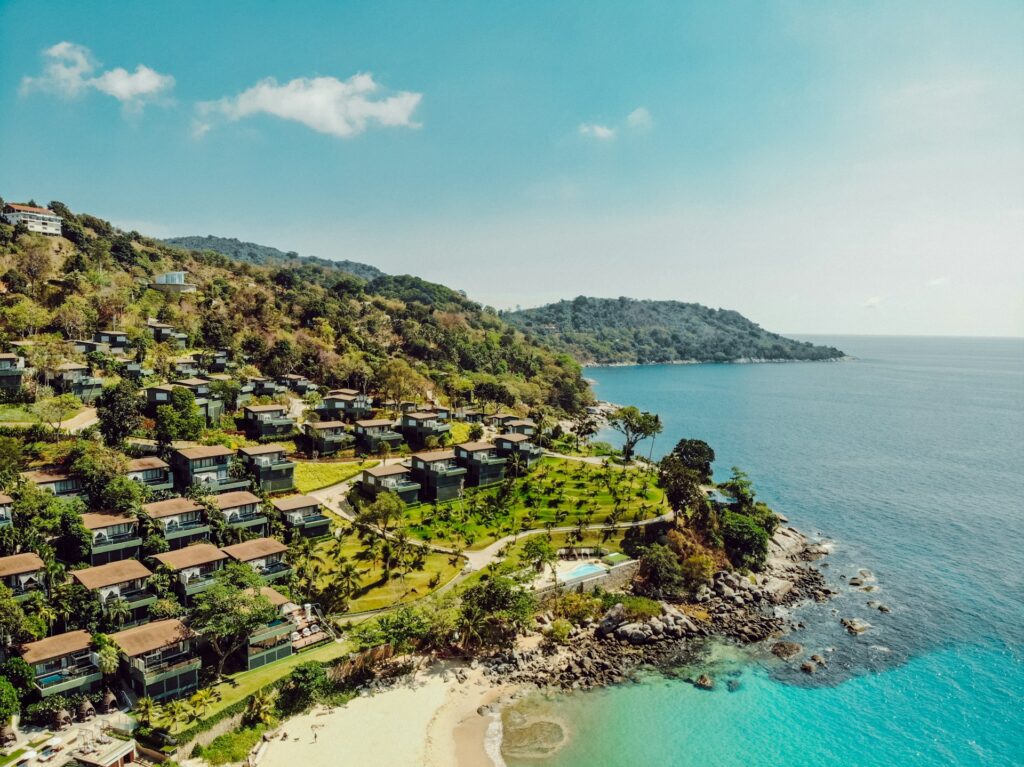
Kata Noi is Kata’s quieter, more beautiful younger sibling — a compact bay with fine sand, clear blue water, and a fraction of the foot traffic. The beach sits just south of Kata Beach and is flanked by green hills on three sides, which gives it a sheltered, intimate feel.
There’s one main beach club/resort at the northern end, but most of the beach is open and uncrowded. In high season the water is calm and excellent for swimming. During low season (May–October), strong rip currents develop and red flags are frequently posted — swimming is not advised.
Getting there: Blue songthaew from Phuket Town (ตัวเมืองภูเก็ต) to Kata, then a short scooter or taxi ride south. From Patong, use the Phuket Smart Bus or a Grab/Bolt — there’s no direct songthaew between Patong and Kata.
4. Surin Beach (หาดสุรินทร์) — Best for Upscale Day Trips
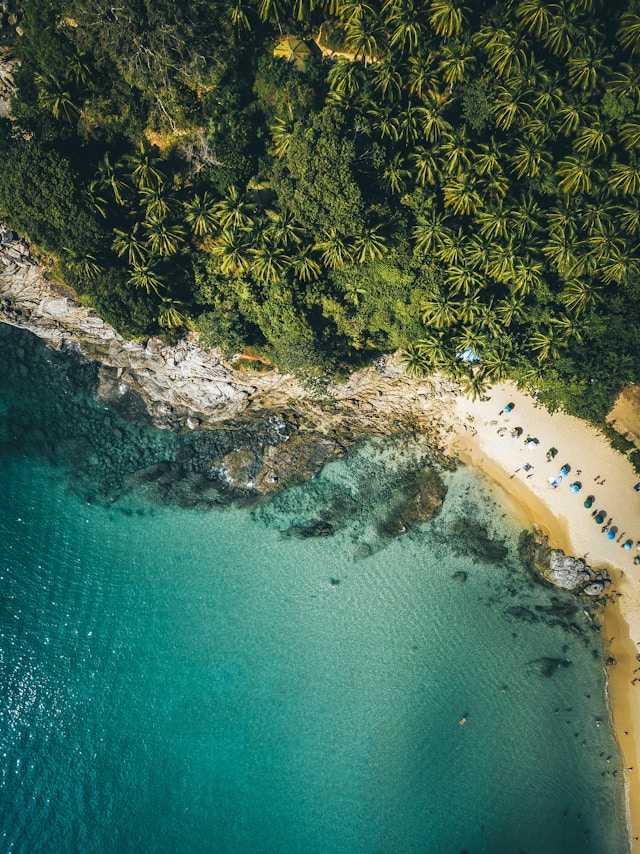
Surin draws a crowd that wants style without the Patong circus: golden sand, blue water, beach clubs with decent food, and a generally attractive scene. It sits on the upper-west coast between Kamala and Bang Tao and is one of the better-looking beaches in terms of sand colour and surf backdrop.
The water has a moderate shore break and a mild current — fine for confident swimmers, less ideal for young children. The beach is wide enough that even a moderately busy afternoon feels spacious.
Getting there: There’s no direct songthaew from Patong to Surin. The most practical public option is the Phuket Smart Bus (Airport–Rawai line), which stops at Patong, Kamala, Surin, and Bang Tao — runs every 60 minutes, THB 100 flat fare (or distance-based with a Rabbit Card). Journey time from Patong is 25–35 minutes depending on Kamala traffic. Taxi or Grab is faster if you’re not on a tight budget.
5. Bang Tao Beach (หาดบางเทา) — Best Long Beach
At roughly 8 km long, Bang Tao Beach (หาดบางเทา) is Phuket’s longest beach and one of its most underrated. The southern end near Laguna Resort is resort-heavy and groomed; the northern end near Layan is quieter, wilder, and virtually empty on weekdays.
It’s a favourite among digital nomads and long-stay visitors who want a beach that doesn’t feel like a theme park. The sunsets here are excellent and largely unobstructed. Water activities in Phuket like kitesurfing and paddleboarding are popular here, particularly in the shoulder season when winds pick up.
Getting there: The Phuket Smart Bus (Airport–Rawai line) covers Bang Tao — runs every 60 minutes, THB 100 flat fare. The beach is large enough that your exact stop matters — the Laguna stop for the southern resort end, or ride further north toward Layan for seclusion.
6. Kata Beach (หาดกะตะ) — Best for Families
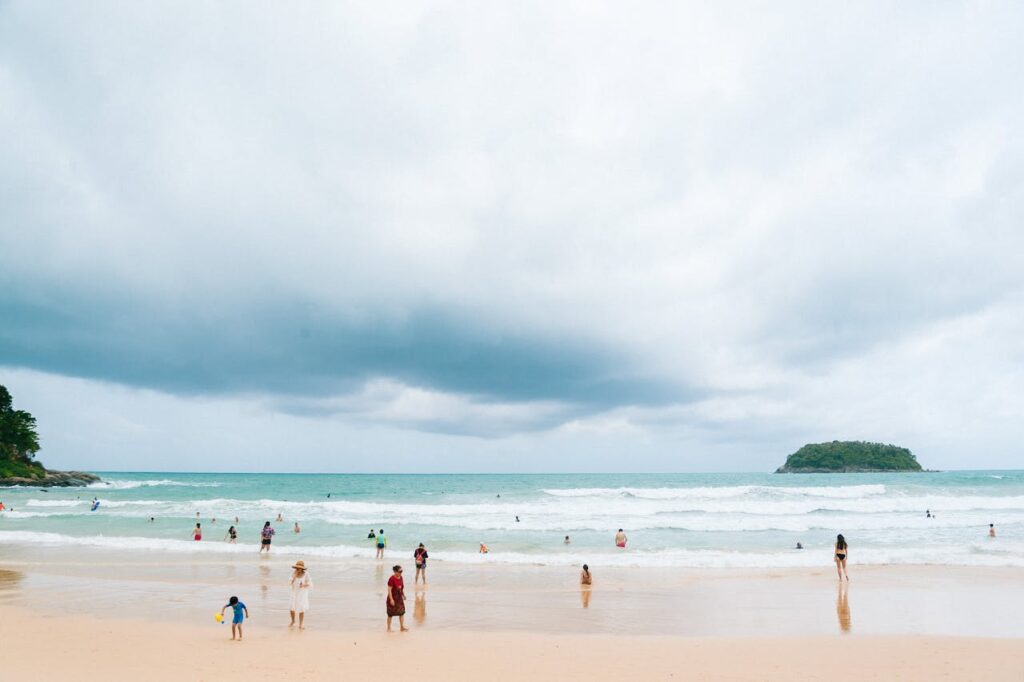
Kata Beach ticks the right boxes for families: manageable size, calm-ish water in high season, good food options within walking distance, and reliable infrastructure. It also has one of Phuket’s better surf breaks, which makes it popular with beginners getting into surfing in Phuket for the first time.
The beach has a clear north–south split: the northern section near the roundabout is busier with beach chairs and jet skis; the southern half is calmer and better for swimming. It’s one of the top picks in our full rundown of things to do in Phuket with family.
Getting there: Blue songthaews run direct from Phuket Town (ตัวเมืองภูเก็ต) to Kata and Karon. From Patong there’s no direct songthaew — take the Phuket Smart Bus or a Grab/Bolt. Travel time from Patong is around 20 minutes by scooter or taxi; 15–25 minutes via Smart Bus depending on traffic.
7. Karon Beach (หาดกะรน) — Best for Space
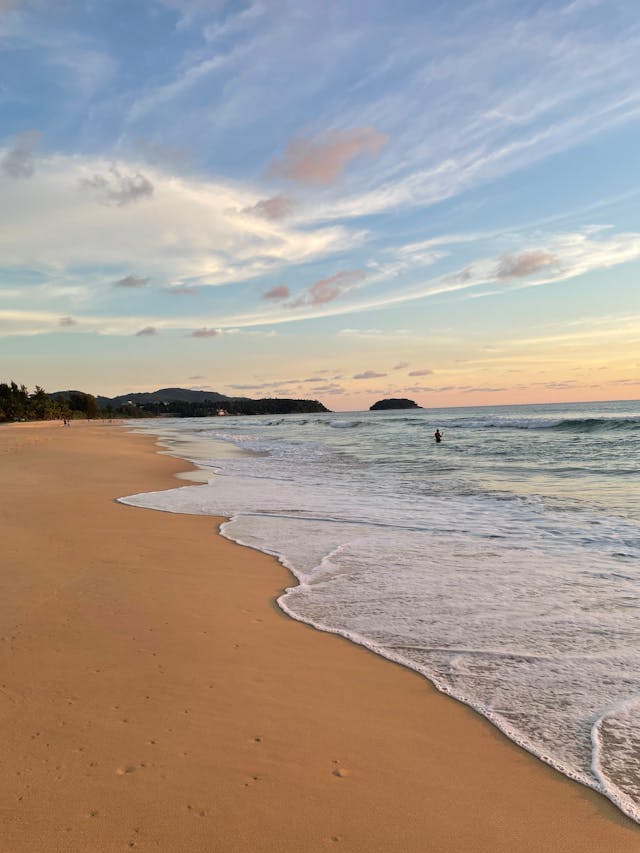
Karon is the least appreciated of the three main southern beaches — and that works in its favour. It’s long (around 3 km), rarely packed, and has fine, squeaky sand that’s unusually pale for Phuket. The beach clubs and bars are lower-key than Kata or Patong, and the water is generally clean.
The drawback: a rip current runs along the beach during low season and needs to be taken seriously — always swim between the red-and-yellow flags. The Karon Beach guide covers everything you need before visiting, and the things to do in Karon page is worth checking if you’re planning a full day here.
Getting there: Blue songthaews run direct from Phuket Town to Karon. From Patong, use the Phuket Smart Bus or Grab — no direct songthaew connection. Journey time from Patong is 15–25 minutes.
8. Kamala Beach (หาดกมลา) — Best Quiet Mid-Island Beach
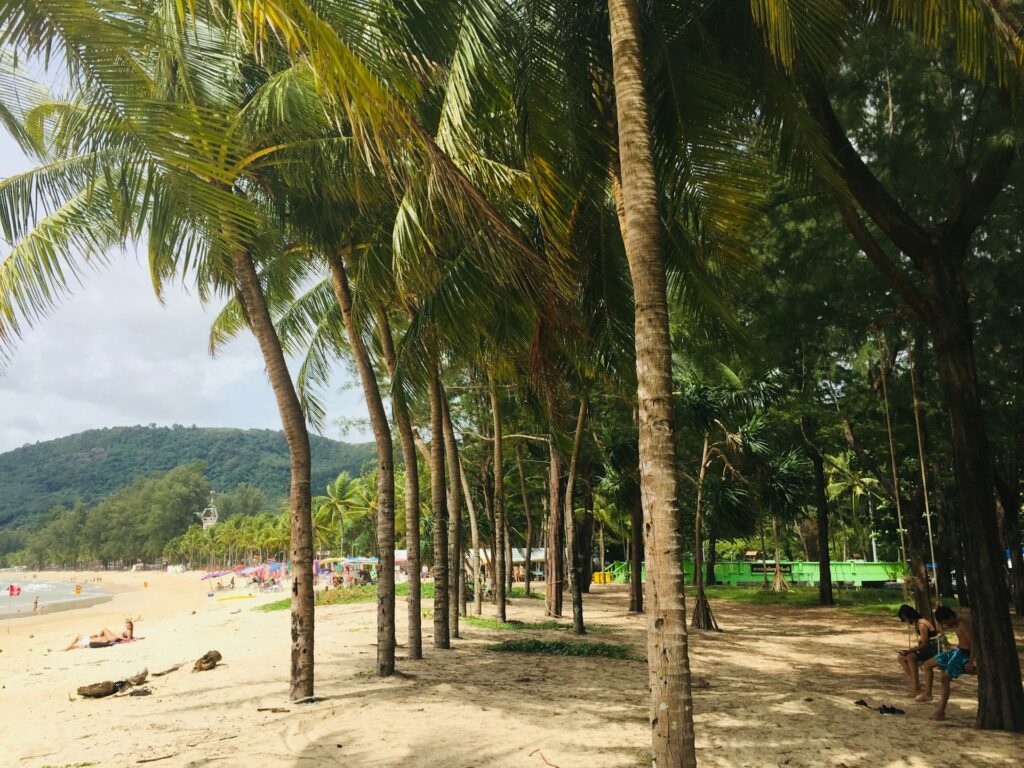
Kamala sits between Patong and Surin and has quietly become one of the better-kept secrets on the west coast. The beach is wide, the water is calm in high season, and the village behind it has a genuine local community feel. It draws fewer package tourists than Kata or Karon, which keeps the beach chairs and hawkers to a minimum.
Kamala Beach has seasonal nuance worth knowing — the best time to visit differs from the rest of the west coast, and there’s a solid list of things to do in Kamala beyond the beach itself.
Getting there: 15–20 minutes from Patong. The Phuket Smart Bus (Airport–Rawai line) stops here, or take a taxi — it’s one of the more straightforward runs on the west coast.
9. Nai Yang Beach (หาดในยาง) — Best Near the Airport
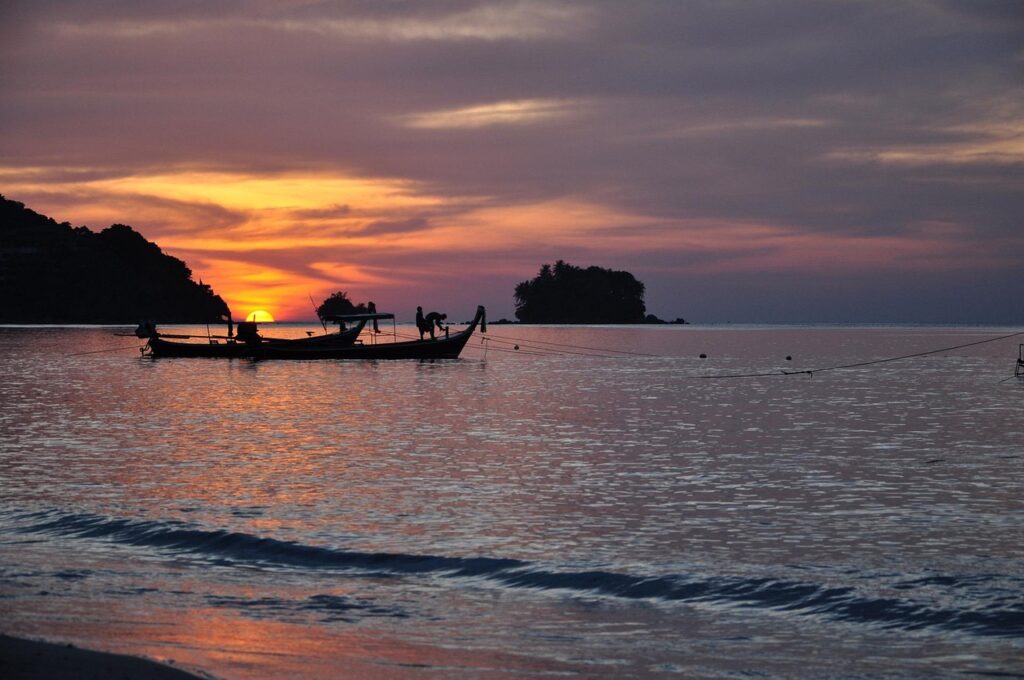
Nai Yang is part of Sirinat National Park (อุทยานแห่งชาติสิรินาถ), which keeps development tightly controlled. The beach is long, shaded by casuarina trees, and calm enough for safe swimming for most of the year. Sea turtles nest here between November and February.
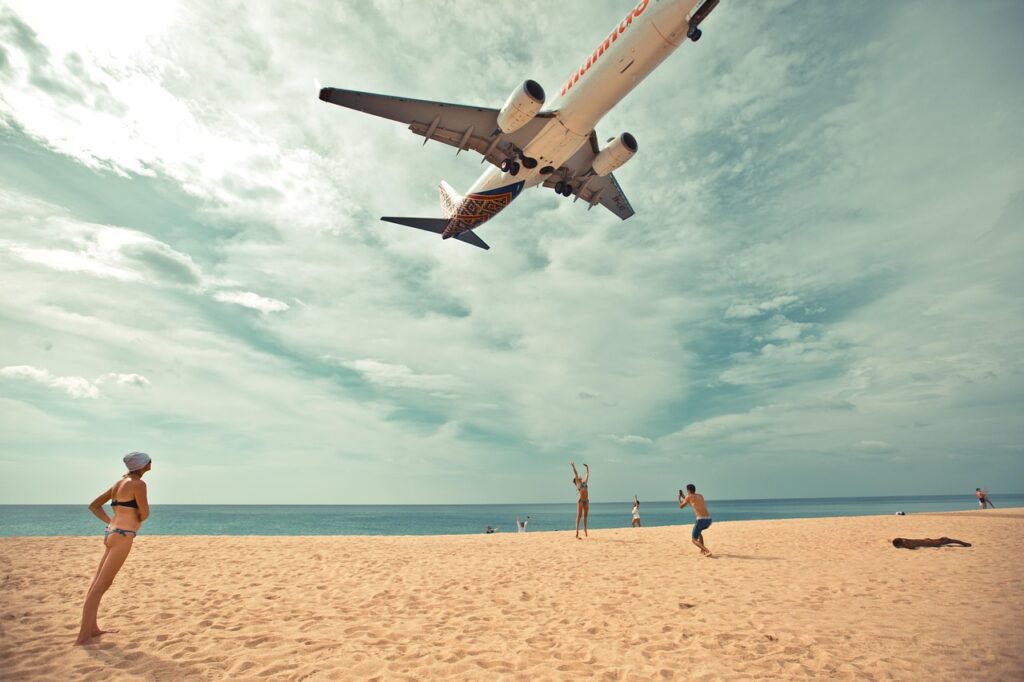
Its location near Phuket International Airport makes it an overlooked option for first or last nights on the island — just 10–15 minutes by taxi from the terminal, or a 5-minute drive from the domestic side.
Getting there: 10–15 minutes by taxi from the main terminal; around 5 minutes from the domestic terminal.
10. Patong Beach (หาดป่าตอง) — Best for Nightlife
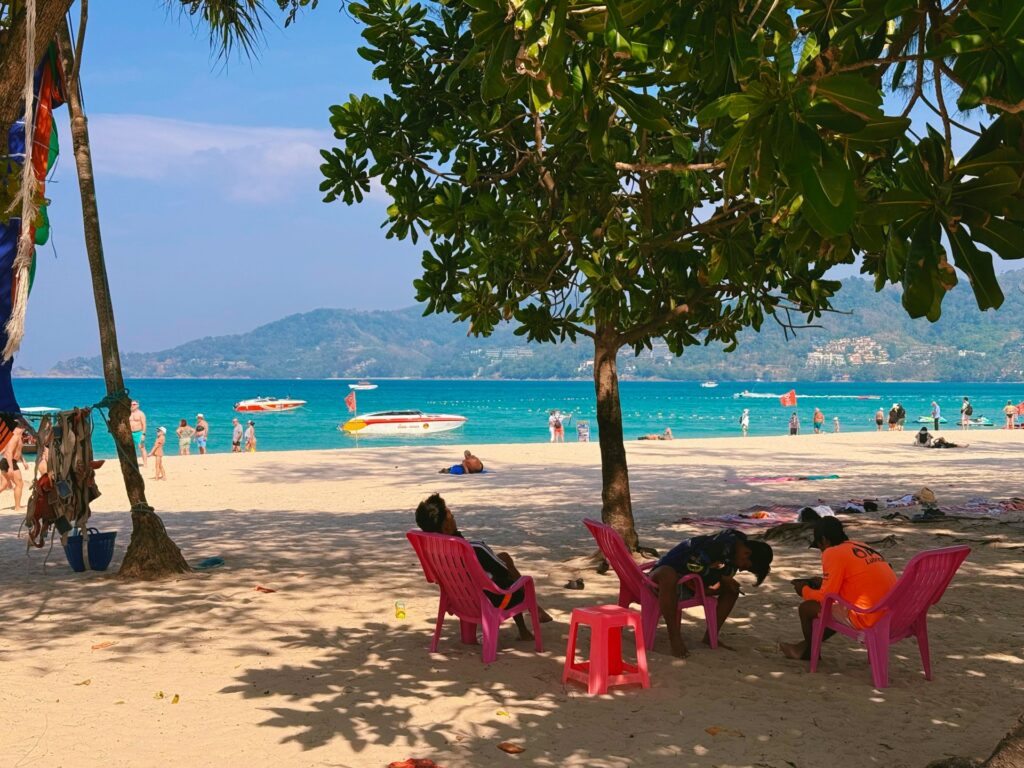
Patong (หาดป่าตอง) is the most famous beach in Phuket and also the most divisive. The sand is decent, the water swimmable in high season, and the beach infrastructure is well-developed. What it isn’t is peaceful. Jet ski operators, beach chair vendors, and a constant flow of traffic along Beach Road make it the most commercialised stretch on the island.
That said, if you’re here for access to restaurants, bars, Bangla Road nightlife, and a wide range of water sports, Patong delivers. The Patong Beach guide has area breakdowns and practical logistics, and the things to do in Patong page covers how to fill the hours beyond the sand.
Getting there: Blue songthaews run direct from Phuket Town (ตัวเมืองภูเก็ต) to Patong. From Kata or Karon, use the Phuket Smart Bus or Grab — no direct songthaew between these beaches. Most of the island is within 30–45 minutes by taxi.
Hidden and Lesser-Known Beaches Worth Seeking Out
Phuket’s hidden beaches don’t feature on most package tour itineraries, and that’s their main selling point.
Banana Beach (หาดกล้วย) — A small cove north of Bang Tao near Nai Thon, accessible by a short walk through trees. Almost no infrastructure; bring your own water.
Ao Sane Beach (อ่าวเสน) — Rocky, snorkel-friendly bay just east of Nai Harn. The water here holds parrotfish, eels, and occasional sea turtles around the granite boulders — some of the best off-beach snorkelling on the island. Reach it on foot from Nai Harn in around 15 minutes.
Laem Singh Beach (แหลมสิงห์) — Between Kamala and Surin. Land access remains closed due to an ongoing private dispute. The only ways in are by long-tail boat from Surin Beach (approximately THB 100 per person) or via the coastal rock path from the southern end of Surin Beach — a 15–20 minute scramble that requires decent footwear and a low tide.
Want to Go Beyond Phuket? Island Day Trips Worth the Boat Ride
The beaches above are all on Phuket itself. If you want to go further, you’re looking at a ferry or speedboat and a proper day out — but the payoff is real.
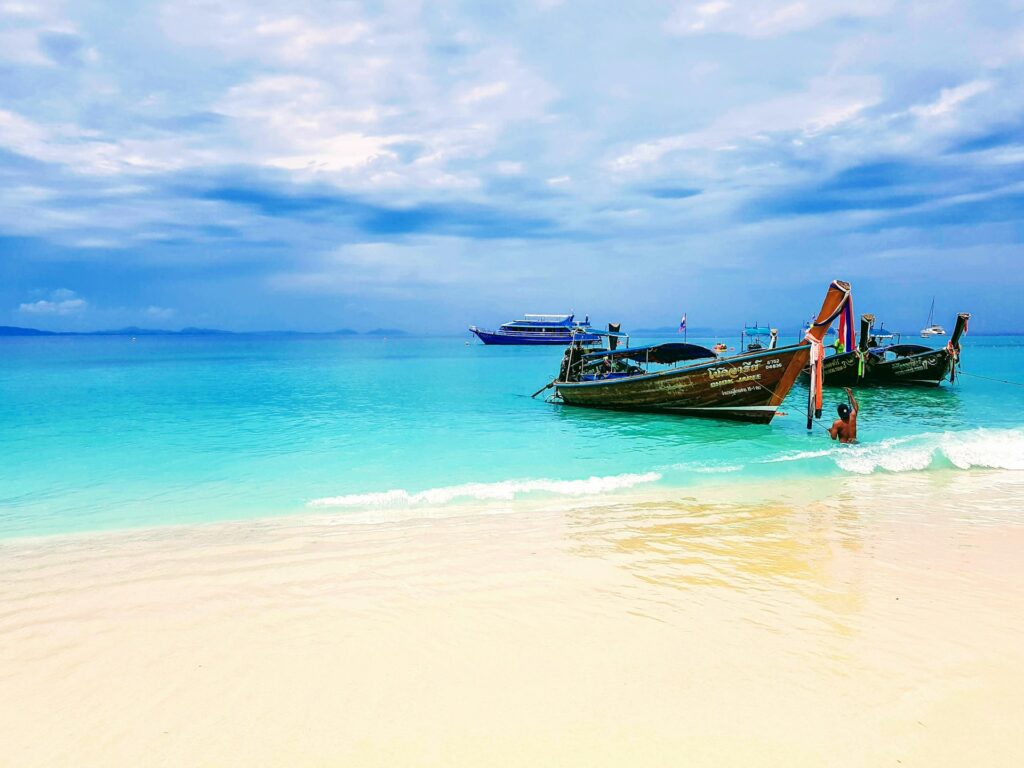
Phi Phi Islands are the obvious starting point: dramatic limestone cliffs, clear water, and snorkelling that outperforms anything on the main island. If you want to dive rather than snorkel, Phi Phi Islands scuba diving is some of the most accessible in the Andaman. Coral Island (Koh Hey) is a shorter trip and suits families or anyone who wants calm, clear water without a full-day commitment.
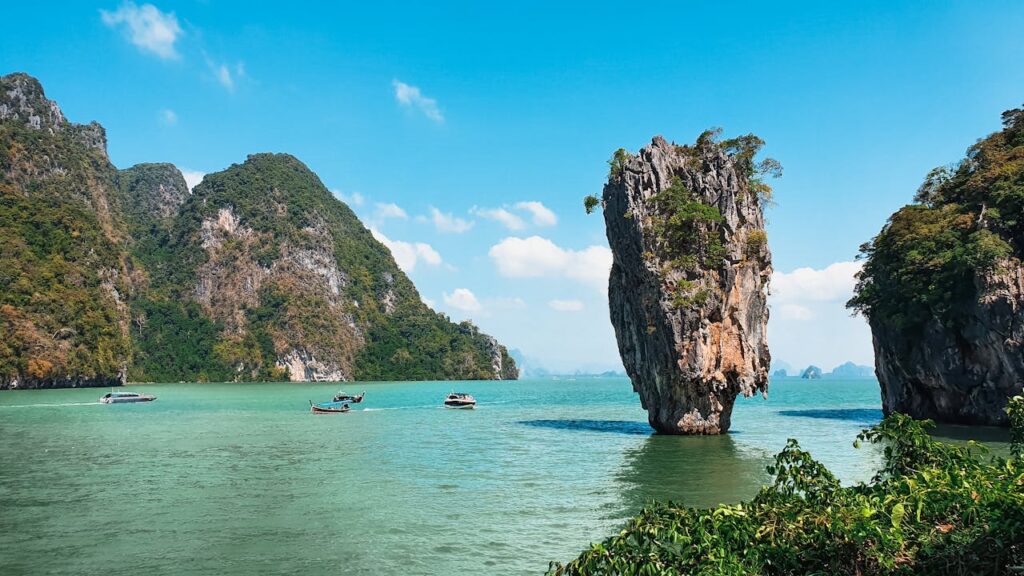
James Bond Island (เกาะเขาพิงกัน) in Phang Nga Bay is a different kind of day trip — more about the scenery and the iconic rock formations than the beach itself. Not sure whether Phi Phi or James Bond Island suits your trip better? The Phi Phi vs James Bond Island comparison breaks it down directly. For serious snorkellers and divers, the Similan Islands are worth the longer journey — consistently ranked by PADI and Dive Magazine as a top 10 global dive site, with whale shark and manta ray sightings and some of the best underwater visibility in Southeast Asia.
When to Visit Phuket’s Beaches
High season (November to April) brings dry weather, calm seas, and the best conditions for swimming and snorkelling across all beaches. This is peak season — expect higher prices and crowds at the main spots.
Low season (May to October) sees waves, rain, and genuine rip currents at beaches like Karon, Patong, and Kata. Nai Harn and Rawai on the southern tip are typically more protected. Always check the flag system: red means no swimming, regardless of how the water looks.
FAQs
Freedom Beach is consistently rated the most beautiful beach on the island — clear turquoise water, white sand, and low crowds due to its boat-access-only location. For a beach that’s both beautiful and easy to reach, Nai Harn Beach is the most reliable pick.
Kata Beach is the most family-friendly option: calm water in high season, good food and facilities nearby, and enough space to spread out. Karon Beach is a good alternative if you want more space and fewer crowds.
Patong Beach is the most famous and most visited beach in Phuket. It’s the centre of the island’s nightlife and tourist infrastructure, though it’s also the most commercialised.
Freedom Beach and Ao Sane Beach offer the best snorkelling directly from shore — Ao Sane in particular has parrotfish, eels, and sea turtles around its granite boulders. For dedicated diving, a day trip to the Similan Islands is in a different league: PADI and Dive Magazine consistently rank it a top 10 global dive site for visibility and marine life.
Nai Yang Beach and the northern section of Bang Tao Beach are among the quietest. Nai Yang’s national park status limits development, and the northern end of Bang Tao sees very little foot traffic even in high season.
Kata Noi and Freedom Beach consistently have the clearest water on Phuket’s west coast in high season. Water clarity across the island is at its best from December to March.
Virtually all of Phuket’s best beaches are on the west coast, facing the Andaman Sea. The east coast faces Phang Nga Bay and has mudflats and mangroves rather than sandy beaches.
Some beaches remain swimmable in low season (May–October), particularly Nai Harn and Nai Yang which are more sheltered. Most west coast beaches develop rip currents and strong shore break — always check the flag system and never swim at a red flag.
Kata Noi Beach is the top pick for couples — it’s intimate, visually stunning, and calm enough to be genuinely relaxing. Surin Beach is a good alternative if you want a beach club scene with the same upscale feel.
Blue songthaews run fixed routes from Ranong Road in Phuket Town (ตัวเมืองภูเก็ต) to Kata, Karon, and Patong for THB 30–50 per person. For beaches further north — Kamala, Surin, Bang Tao — the Phuket Smart Bus (Airport–Rawai line) is the best public option at THB 100 flat fare, running every 60 minutes.