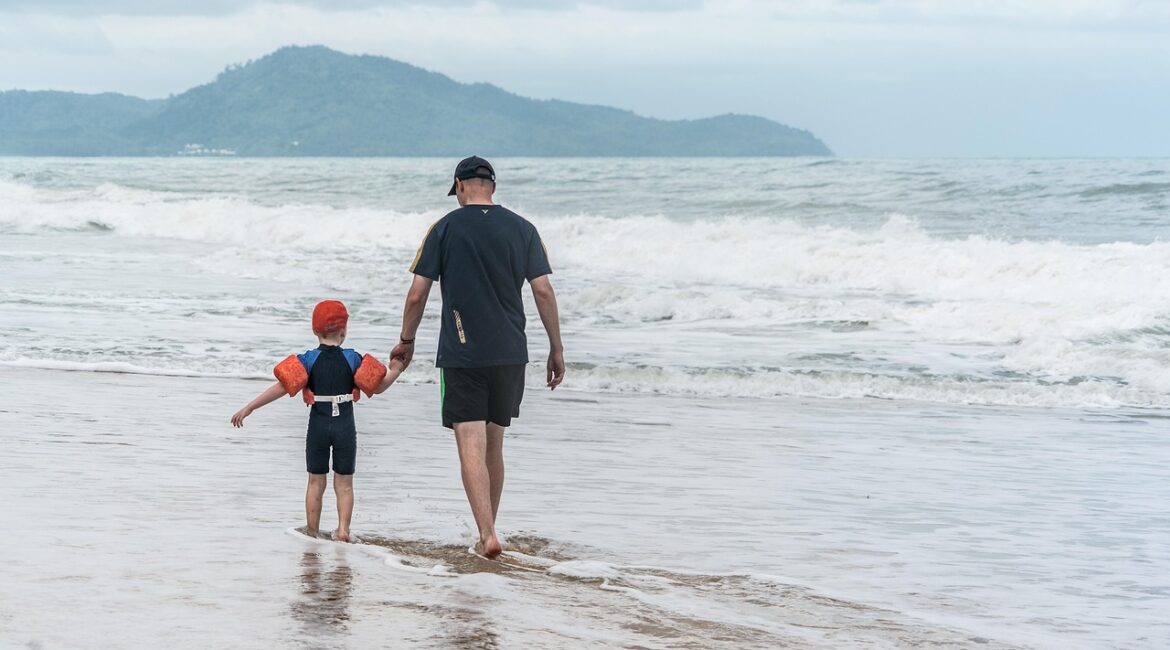
⚠️ Important 2026 Update: As of May 2026, Thailand’s Royal Forest Department has ordered the demolition of 11 illegal structures at Nui Beach, with a June 2026 enforcement deadline. The beach itself is publicly open and free — but expect no commercial amenities on-site. Read the full update below before you plan your visit.
Is Nui Beach in Phuket open and free to visit? Yes — Nui Beach is a public beach and completely free to enter. Following a May 2026 ministerial order by Natural Resources and Environment Minister Suchart Chomklin, illegal entry fees were abolished and access was restored within days. The commercial structures on-site have been ordered for full demolition, with removal due for completion by early June 2026.
Nui Beach (หาดนุ้ย) is a small, dramatic cove tucked between Kata Beach (หาดกะตะ) and Nai Harn Beach (หาดในหาน) on Phuket’s southwest coast. It sits roughly 3 km south of the Karon Viewpoint (จุดชมวิวกะรน), down a steep dirt track inside a protected forest zone managed by the Royal Forest Department’s Phuket Forestry Centre. The beach spans approximately 120 metres of coarse yellow sand, flanked by massive coastal boulders and backed by jungle hills — one of the more visually striking coves on the island.
Getting down there takes effort. That’s half the reason it stays less crowded than Kata or Karon. If you’re building a full day out in this corner of Phuket, check our guide to hidden beaches in Phuket for nearby options worth stacking into the same trip.
What Is Nui Beach Phuket Actually Like?
The beach is compact — don’t expect a long stretch of sand. What it offers instead is clear, blue-green water, dramatic rock formations ideal for snorkelling, and a cove atmosphere that feels genuinely removed from Phuket’s tourist belt.
The seabed transitions from coarse sand to submerged rocks fairly quickly. Reef shoes are strongly recommended — the rocks can be sharp, especially closer to the boulder formations on either side of the bay.
In past seasons, the beach featured Instagram-friendly installations: hanging swings over the water, rattan cocoon chairs, and a novelty bathtub positioned among the rocks. These structures were built on land confirmed by the Royal Forest Department to be protected forest — and as of mid-2026, they are in the process of being removed.
2026 Status Update: What’s Happening at Nui Beach Right Now?
This is the most important thing to read before you visit.
Thailand’s Royal Forestry Department issued an urgent order mandating the removal of 11 unauthorised structures within the protected forest zone at Nui Beach, with a deadline of 5 June 2026. The move stems from a long-running dispute where investors allegedly occupied protected forest areas and charged illegal entrance fees to visitors. Court rulings between 2018 and 2024 had already confirmed violations, but operators continued to occupy the land despite legal action.
This is not the first time enforcement has been attempted. The original beach club was demolished in July 2020 by over 100 officers — but structures were rebuilt on the same protected land shortly after. The 2026 order carries stronger political backing: Prime Minister Anutin Charnvirakul visited Phuket on 13 May 2026 and vowed to act against influential groups illegally controlling tourism areas, followed the next day by Natural Resources and Environment Minister Suchart Chomklin, who inspected the beach in person and ordered access restored within one week.
What this means for visitors:
- The beach itself is a natural, public geographic feature — it isn’t going anywhere
- No entrance fee is legally collected and none can be charged — Minister Suchart stated explicitly that no one has the right to charge entry at Nui Beach
- Commercial structures (sunbeds, cafés, photo installations) were ordered demolished with a completion deadline of early June 2026 — physical clearance is expected to be complete, but verify on arrival if any partial structures remain
- The 4×4 shuttle service from the upper parking lot may still be operating independently from local drivers — verify on arrival
Visit the beach for what it actually is: a stunning natural cove. Don’t plan your trip around the swings.
How to Get to Nui Beach Phuket
Getting to Nui Beach requires planning — there’s no public transport that drops you at the door, and the final descent to the shore is the real challenge. For a broader overview of transport options across the island, see the guide to getting around Phuket.
By Road (Scooter or Car)
Drive south from the Karon Viewpoint (จุดชมวิวกะรน) on Route 4030 toward Nai Harn (ในหาน). You’ll see a sign for Nui Beach on the left — look carefully, it’s easy to miss. Standard rental cars and scooters must be left at the upper parking lot. The final 2 km down to the beach is a steep, rocky dirt track.
Route summary:
| From | Approximate Drive Time | Notes |
| Patong Beach (หาดป่าตอง) | ~35 min | Via Route 4030 south through Karon and Kata |
| Kata Beach (หาดกะตะ) | ~10 min | Short 3 km drive south past Karon Viewpoint |
| Karon Beach (หาดกะรน) | ~15 min | Pass Karon Viewpoint, then south on Route 4030 |
| Phuket Town | ~40 min | Via Chao Fah West Road or Chalong |
The Descent: 4×4 Shuttle or Hike
The slope is steep and the terrain is bumpy, with rocks of various sizes, gravel and sand. Local drivers with modified 4WD pickup trucks operate independently from the main road turnout — the standard price is THB 200 per person for a return trip, collected at the top lot.
If you’d rather not pay, you can hike — but budget 15–20 minutes of dusty, steep walking each way. Wear closed shoes and carry more water than you think you need.
By Long-Tail Boat
You can reach Nui Beach by sea, which cuts out the descent entirely. Long-tail boats can be chartered from Kata Beach (หาดกะตะ) or Karon Beach (หาดกะรน) — expect to pay THB 1,000–1,500 per boat return. The historic sea landing fee of THB 100 has been abolished following the June 2026 enforcement action.
Things to Do at Nui Beach
Snorkelling
The rock formations on either side of the cove create natural habitat for reef fish, and water clarity is generally good in high season (November–April). Bring your own gear — there are currently no rental vendors operating on the beach following the 2026 enforcement action. For serious underwater exploration, see the guide to Phi Phi Islands scuba diving for what’s possible on a full-day trip out of Phuket.
Swimming
The water is calm inside the cove during high season. Be aware of submerged rocks — reef shoes make a meaningful difference. The swimming area is relatively limited in size.
Photography
Even without the installed photo props, Nui Beach is one of the more photogenic coves in Phuket. The boulder formations, jungle backdrop, and blue-green water create a naturally dramatic setting. Early morning light before 9am hits the cove well from the east.
Sunset Views
The elevated vantage points on the track down to the beach offer reasonable afternoon views over the Andaman Sea. The Karon Viewpoint just up the road is worth a stop on the way back — pair it with a visit to Karon Beach if you want to continue exploring the area.
Nui Beach vs Ya Nui Beach: Don’t Confuse These Two
This is one of the most common mix-ups in Phuket travel planning — the names are similar, the locations are nearby, and most older guides don’t explain the difference clearly.
| Feature | Nui Beach (หาดนุ้ย) | Ya Nui Beach (หาดยะนุ้ย) |
| Location | Between Kata and Nai Harn | Between Nai Harn and Promthep Cape |
| Road Access | Steep, unpaved 2 km dirt track | Paved road with direct beachside parking |
| Entry Fee | Free (abolished June 2026) | Free public beach |
| Best Activity | Secluded snorkelling and boulder photography | Kayaking, paddleboarding, and swimming |
| Amenities | None (structures demolished June 2026) | Local restaurants, street food, gear rentals |
Ya Nui Beach (หาดยะนุ้ย) lies between Promthep Cape and Windmill Viewpoint, offering good snorkelling, kayaking, and fishing from a far more accessible location. If you’re after ease and a relaxed afternoon, Ya Nui is the better call. If you want the drama and the hike, Nui Beach delivers.
Best Time to Visit Nui Beach
High season — November through April — is the clear window. The Andaman coast gets its calmest seas and best water visibility during these months, ideal for snorkelling and swimming inside the cove.
May to October is monsoon season. The dirt track becomes significantly more treacherous when wet, and sea conditions in the cove can be rough. Don’t visit on a wet day without checking conditions locally first. For a full breakdown of when to plan your Phuket trip, see best time to visit Phuket.
What to Pack for Nui Beach
There are currently no active food or beverage vendors on the beach following the demolition of commercial structures. Pack as if you’re heading somewhere completely remote.
- Reef shoes — non-negotiable given the rocky seabed and boulder approach
- Drinking water — bring more than you expect; the descent is hot and there is nothing available on the beach
- Snorkel gear — pack your own; there are no rental vendors currently operating on-site
- Cash — for the 4×4 shuttle (THB 200 return per person)
- Sunscreen — the cove offers limited natural shade
Nearby Beaches Worth Adding to Your Day
If you’re already driving out to this corner of southwest Phuket, the surrounding area has some of the island’s best beach options within short reach.
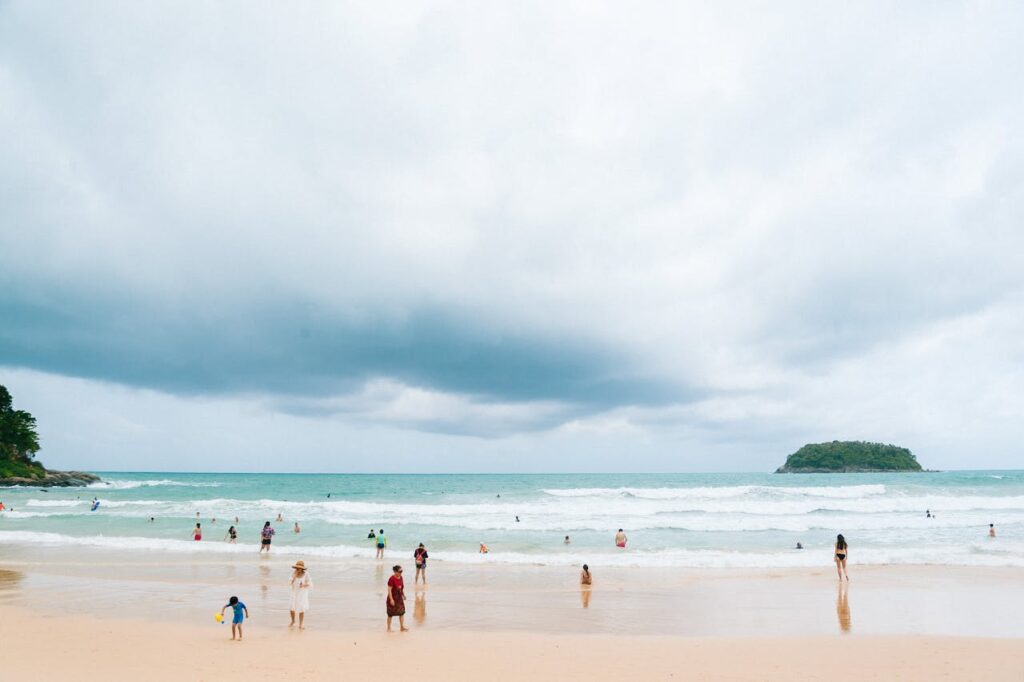
Kata Beach — 10 minutes north, good surf in low season, reliable restaurants and cafés along the strip.
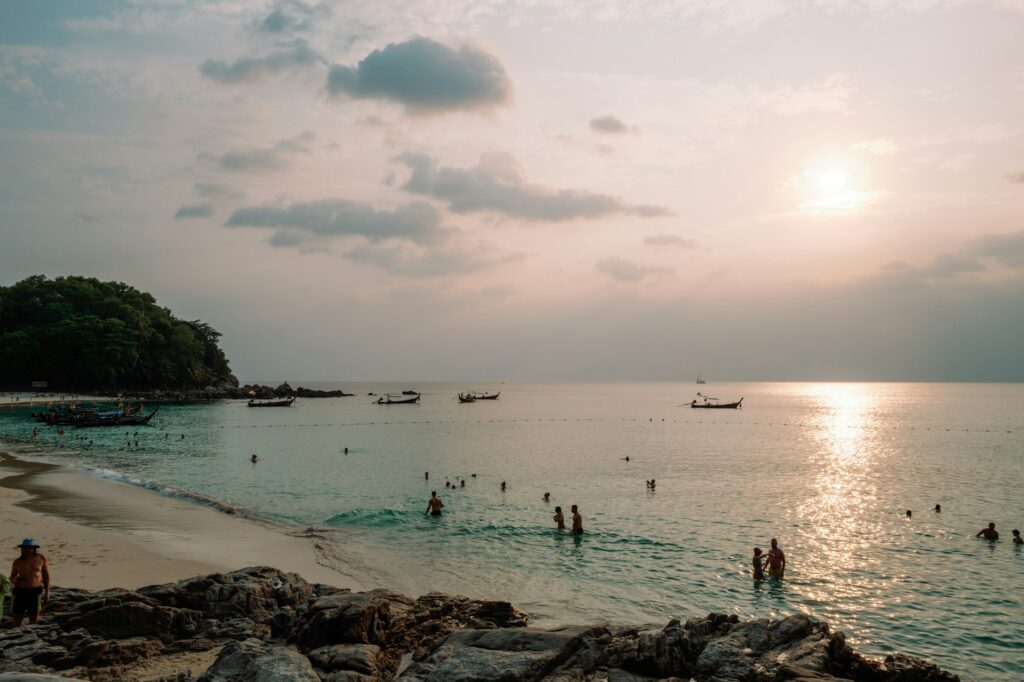
Freedom Beach — Another hidden-access cove, similarly off the beaten track and with its own enforcement history. Check things to do at Freedom Beach for current access details.
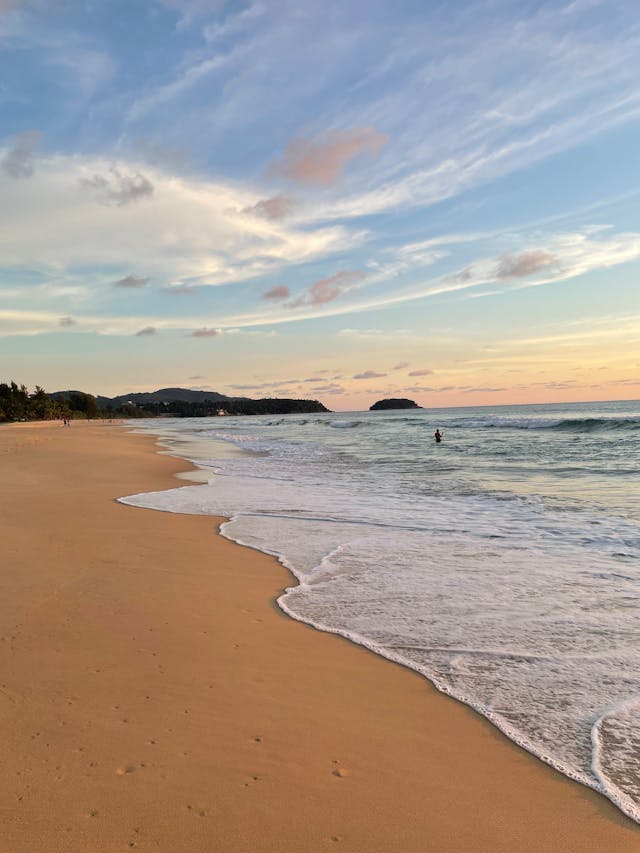
Karon Beach — Quieter than Patong, long stretch of sand, easier parking. The things to do in Karon page covers the full picture for a longer stay.
Nai Harn Beach — 5 minutes south of Nui Beach, one of Phuket’s best-loved local beaches. Calmer, family-friendly, with a lagoon tucked behind it.
If you’re building a full southern Phuket day itinerary, the Phuket itinerary guide covers how to string these stops together efficiently.
Practical Info at a Glance
| Detail | Info |
| Location | Between Kata Beach and Nai Harn, southwest Phuket |
| GPS / Map | Search “Nui Beach Phuket” on Google Maps |
| Beach length | ~120 metres |
| Entrance fee | Free — abolished by ministerial order, May 2026 |
| 4×4 shuttle | THB 200 per person return |
| Long-tail boat | THB 1,000–1,500 per boat return from Kata or Karon |
| Sea landing fee | Abolished June 2026 |
| Best season | November–April |
| Parking | Upper parking lot — free |
| Nearest beach | Kata Beach (~10 min), Nai Harn (~5 min) |
| Not to be confused with | Ya Nui Beach (หาดยะนุ้ย) — different beach near Promthep Cape |
FAQs
Yes. Natural Resources and Environment Minister Suchart Chomklin ordered access restored and fees abolished in May 2026, stating explicitly that no one has the right to charge entry at Nui Beach. The order was backed by Prime Minister Anutin Charnvirakul, who visited Phuket on 13 May 2026 and vowed to act against groups illegally controlling tourism areas.
Drive south from the Karon Viewpoint on Route 4030 and follow the signs for Nui Beach. Park at the upper lot, then either hike the 2 km steep dirt track (15–20 min) or take a local 4×4 shuttle (THB 200 return per person). You can also charter a long-tail boat from Kata or Karon beach for THB 1,000–1,500 per boat return.
No — they are completely different beaches. Nui Beach (หาดนุ้ย) is between Kata and Nai Harn, accessed via a steep dirt track. Ya Nui Beach (หาดยะนุ้ย) is near Promthep Cape, easily accessible by road, and has always been a free public beach.
The swings, rattan cocoon chairs, and photo installations were part of a commercial operation built illegally on Royal Forest Department land. A demolition order for 11 structures was issued in May 2026 with a June deadline — physical clearance is expected to be complete, but verify on arrival if any partial structures remain.
Yes, but with care. The water inside the cove is generally calm in high season (November–April). The seabed has submerged rocks, so reef shoes are strongly recommended. The swimming area is limited by the size of the cove.
Yes — the boulder formations on both sides of the bay support marine life and water clarity is generally good in high season. Bring your own gear; there are currently no rental vendors operating on the beach following the 2026 enforcement action.
November through April, during Phuket’s dry season. The dirt track is safer when dry, seas are calmer inside the cove, and snorkelling visibility is at its best.
Yes. Long-tail boats can be chartered from Kata Beach or Karon Beach for a sea approach directly to the shore. Budget THB 1,000–1,500 per boat return. The historic sea landing fee of THB 100 has been abolished following the June 2026 enforcement action.
No. As of June 2026, there are no active food or beverage vendors on the beach — all commercial structures were ordered demolished with a completion deadline of early June 2026. Bring all food and water with you. The hike in and out is hot.
Most visitors spend 1.5–3 hours. The beach is compact, so there’s no need for a full-day commitment. It pairs well with Nai Harn or Kata Beach on a southern Phuket day trip.